

Best Event Tents for African Climate: Heat & Rain Solutions
Event organizers across Africa face unique climate challenges that can make or break outdoor celebrations. From scorching 45°C temperatures in the Sahel to sudden tropical downpours in coastal regions, selecting the right event tent requires understanding local weather patterns and engineering solutions that actually work. After supplying tents for major events in Ghana, Kenya, and South Africa, we've learned what separates reliable structures from expensive failures.
If you want to host successful outdoor events in African climates, you need tents engineered specifically for extreme heat, UV exposure, dust storms, and monsoon-level rainfall. This guide covers proven solutions based on real-world deployments across the continent.
Table of Contents
- Understanding African Climate Challenges for Event Tents
- UV-Resistant Tent Materials for Extreme Sun Exposure
- Advanced Ventilation Systems for Temperature Control
- Monsoon-Proof Design Features
- Dust Protection and Sealing Solutions
- Tent Type Comparison for African Conditions
- Regional Considerations Across Africa
- FAQs
- Conclusion
1. Understanding African Climate Challenges for Event Tents
African climates present three critical engineering challenges that standard event tents cannot handle. The greenhouse effect inside enclosed tents can push interior temperatures 15-20°C above ambient levels, creating unbearable conditions for guests. UV radiation intensity reaches 11+ on the UV index across equatorial regions, degrading standard PVC fabric within 18-24 months instead of the typical 5-7 year lifespan.
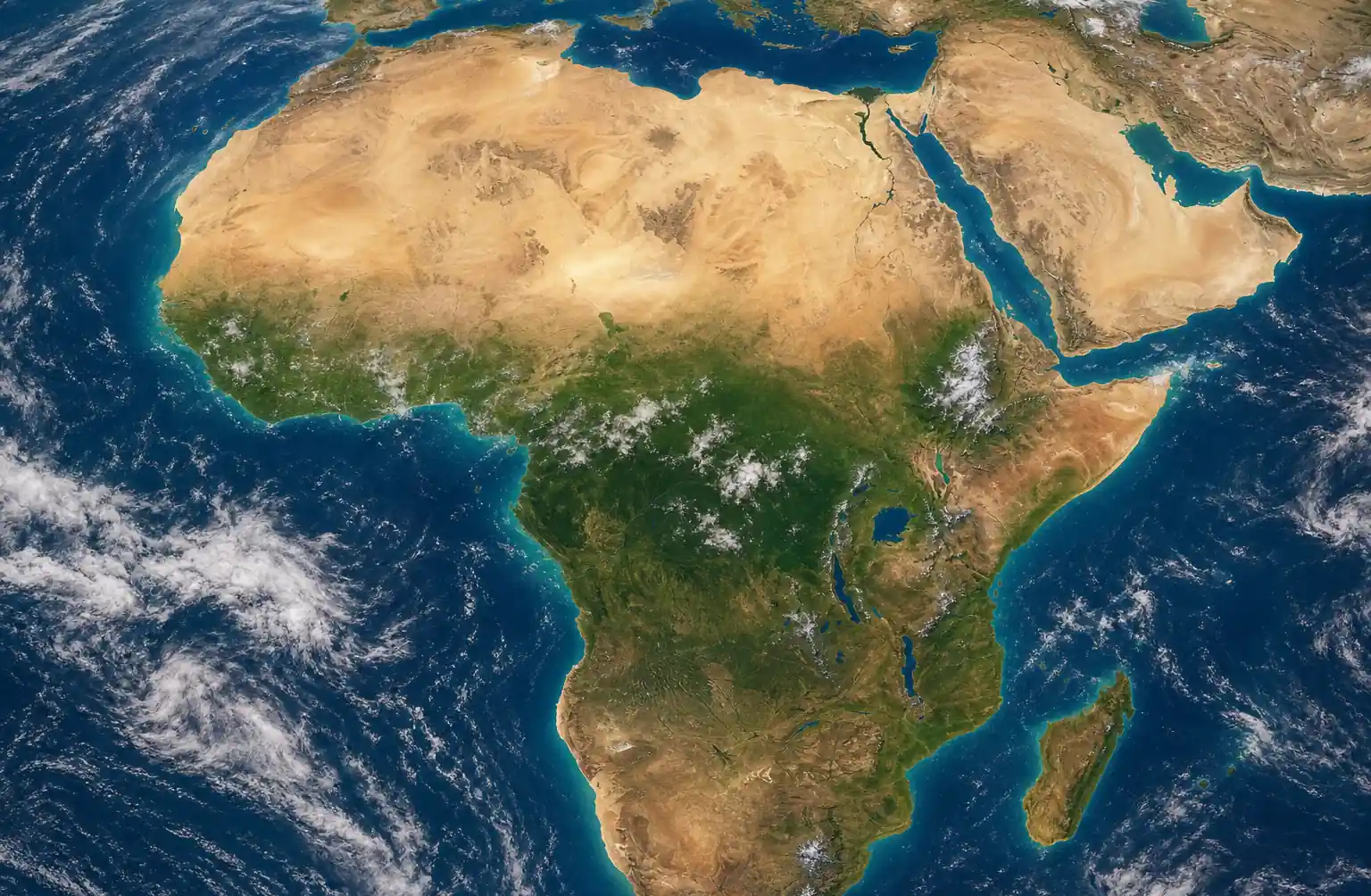 African climate zones showing temperature and rainfall patterns affecting outdoor event planning
Rainfall patterns vary dramatically by region. Coastal West Africa receives 2000-3000mm annually with sudden intense storms, while East African highlands experience concentrated monsoon seasons. The Sahel faces harmattan dust storms that penetrate poorly sealed tent structures, coating surfaces and damaging equipment. You must specify tents engineered for your specific regional conditions rather than relying on generic "weather-resistant" claims.
Wind loads present another critical factor. Coastal areas regularly experience 60-80 km/h winds during storm systems, requiring reinforced aluminum frames and proper anchoring per EN 13782 standards. Inland regions may have lower sustained winds but face sudden dust storm gusts that test structural integrity.
2. UV-Resistant Tent Materials for Extreme Sun Exposure
Standard 650g/sqm PVC-coated polyester fabric fails rapidly under African sun exposure. You need specialized UV-resistant materials with titanium dioxide additives that reflect rather than absorb solar radiation. Our 850g/sqm heavy-duty PVC fabric with integrated UV stabilizers maintains structural integrity for 7-10 years in equatorial deployments, compared to 18-month failure rates for standard materials.
Double-layer roof systems provide the most effective heat reduction. The outer layer blocks direct sunlight while an inner ceiling with 15-20cm air gap creates thermal buffering. This configuration reduces interior temperatures by 12-15°C compared to single-layer designs, as confirmed in our Kenya installations where ambient 38°C conditions maintained 26-28°C interiors without mechanical cooling.
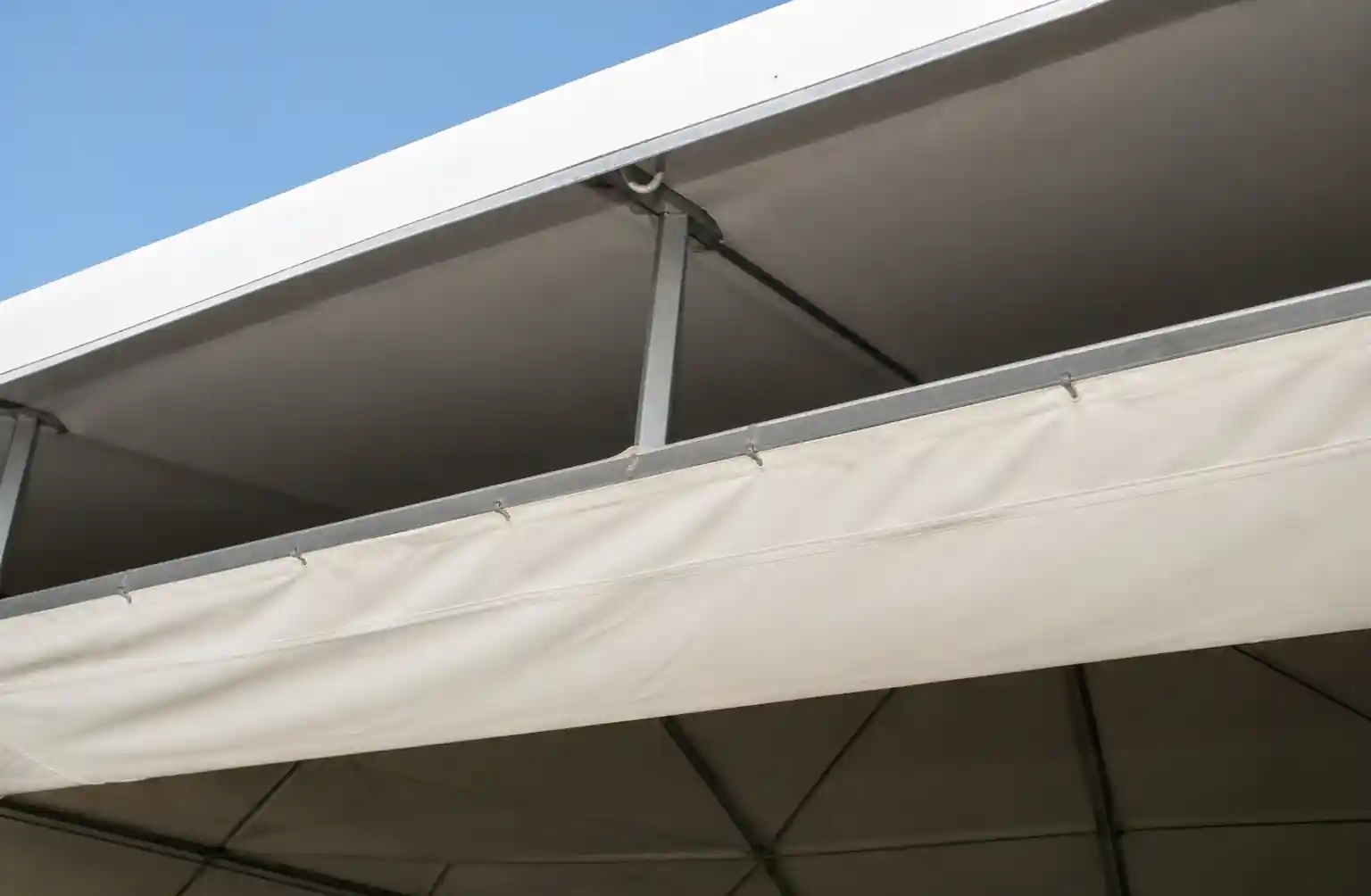 Double-layer UV-resistant tent roof system with thermal air gap for African sun protection
Fabric selection should prioritize these specifications:
- UV resistance rating: Minimum 50+ UPF (Ultraviolet Protection Factor)
- Flame retardancy: DIN 4102 B1 or NFPA 701 certification for safety compliance
- Waterproof rating: 3000mm hydrostatic head minimum for tropical rain
- Thickness: 850g/sqm for main structures, 750g/sqm acceptable for sidewalls
- Color: Light colors (white, cream) reflect 70-80% of solar radiation versus 30-40% for dark colors
The fabric surface coating matters significantly. PVDF (polyvinylidene fluoride) topcoats resist degradation better than standard PVC in high-UV environments. This specification adds 15-20% to material costs but extends usable lifespan by 3-5 years, making it cost-effective for permanent or semi-permanent installations.
3. Advanced Ventilation Systems for Temperature Control
Natural convection ventilation cannot overcome the greenhouse effect in African heat. You must integrate mechanical airflow systems for guest comfort. Ridge vents along roof peaks allow hot air escape, but only when combined with lower sidewall vents that create cross-flow patterns. The physics requires vent area totaling at least 8-10% of floor area for effective natural ventilation.
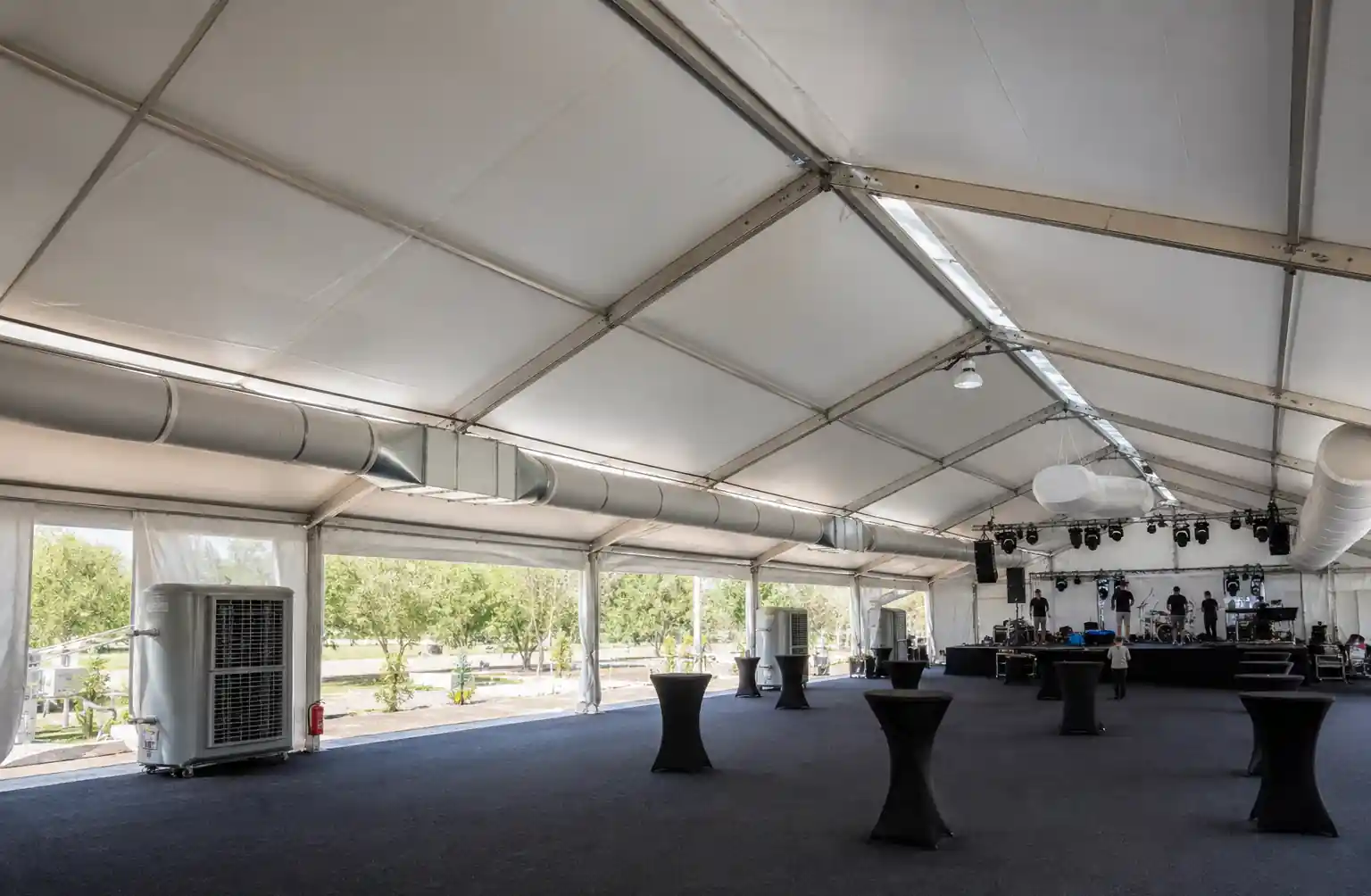 Integrated ventilation system with ridge vents and evaporative cooling for event tent temperature control
Evaporative cooling systems provide the most cost-effective mechanical solution for African climates. These units use water evaporation to reduce air temperature by 10-15°C while adding beneficial humidity in dry regions. Power requirements are minimal compared to traditional air conditioning - typically 1.5-2 kW per 100 sqm versus 8-10 kW for AC systems.
| Cooling Solution | Temperature Reduction | Power Consumption | Best Applications |
|---|---|---|---|
| Natural ventilation only | 3-5°C | None | Small events, moderate climates |
| Ridge + sidewall vents | 6-8°C | None | Weddings, corporate events |
| Evaporative cooling | 10-15°C | 1.5-2 kW per 100 sqm | Large events, dry regions |
| Traditional AC | 18-22°C | 8-10 kW per 100 sqm | VIP areas, extreme heat |
For large-scale events, we deploy ceiling fans (0.5 kW each) positioned every 50-60 sqm. This forced air circulation prevents hot air stratification and creates perceived temperature reduction of 4-6°C through wind-chill effect. Combined with evaporative cooling, this maintains comfortable conditions even during 40°C+ ambient temperatures.
The ventilation system design must account for dust infiltration in Sahel regions. Installing filter screens on intake vents prevents harmattan dust penetration while maintaining airflow. These screens require daily cleaning during dust season but protect interior spaces effectively.
4. Monsoon-Proof Design Features
Waterproofing extends beyond fabric specifications to structural water management. Roof pitch angles of 25-30 degrees ensure rapid water runoff, preventing pooling that leads to fabric stress and potential collapse. Clear span tents with aluminum frames handle water loads better than traditional pole structures because the engineering distributes forces across the entire frame rather than concentrating at support points.
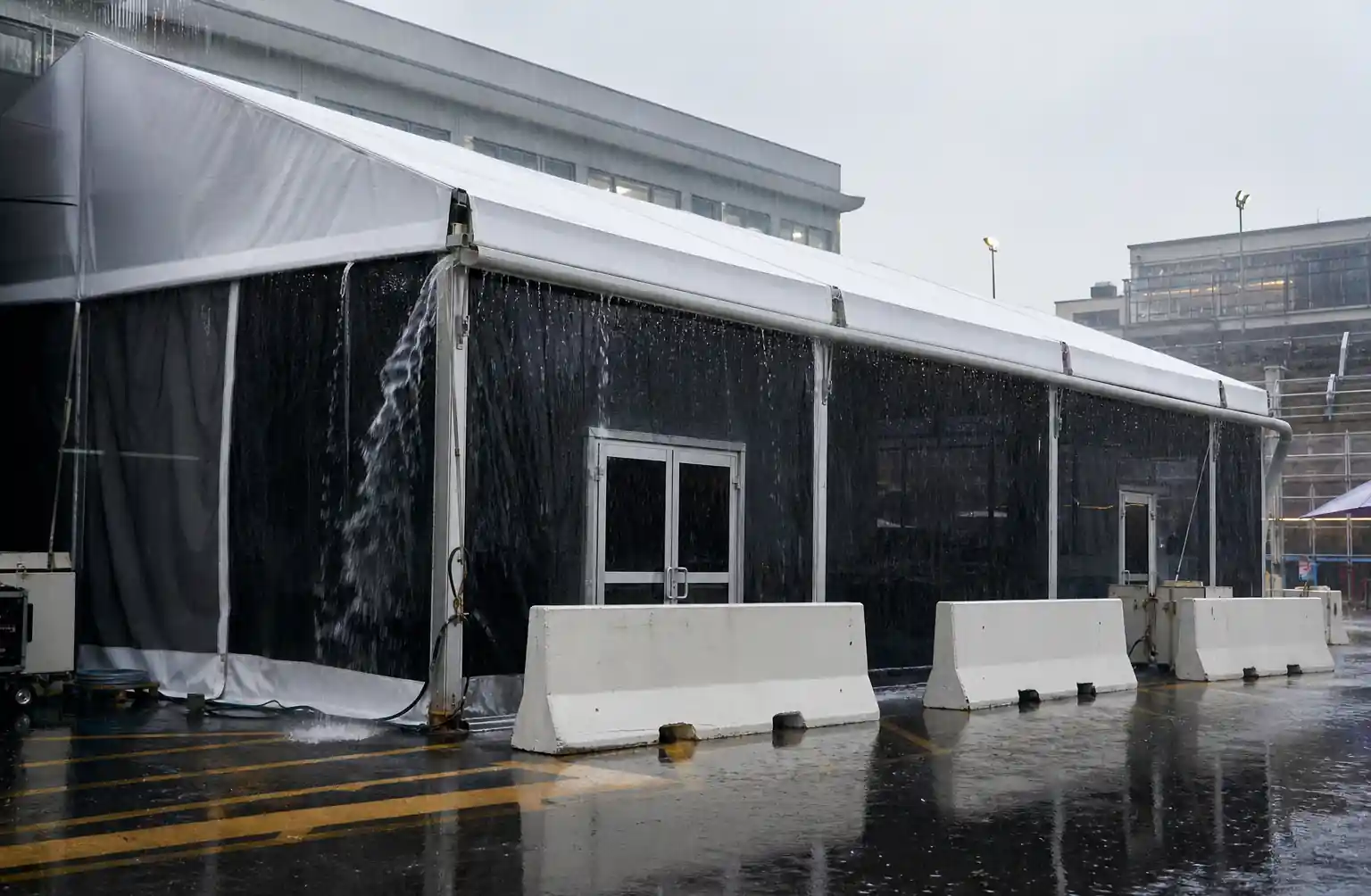 Clear span tent with gutter system and steep roof pitch handling heavy monsoon rainfall
Gutter systems are mandatory for events during rainy seasons. Without gutters, roof water sheets down sidewalls, creating mud zones around the tent perimeter and soaking guests entering or exiting. We install 200mm commercial gutters that channel water to designated drainage points, maintaining dry access throughout the event.
Anchoring becomes critical in wet soil conditions. Standard ground stakes lose holding power in saturated soil, requiring concrete anchoring or ballast weights rated at 25-30 kg per anchor point for structures up to 15m span. Larger sports event structures need engineered foundation systems specified by structural engineers familiar with local soil conditions.
Sidewall sealing prevents rain infiltration during wind-driven storms. The connection between sidewalls and ground must include weighted skirts or ground rails that prevent water channeling underneath. We've observed that 80% of interior flooding comes from ground-level infiltration rather than roof leaks, making this detail crucial for monsoon deployments.
5. Dust Protection and Sealing Solutions
Harmattan dust seasons (November-March in West Africa) require specialized sealing that typical event tents lack. Dust particles under 10 microns penetrate standard tent joints and ventilation openings, coating surfaces and creating respiratory discomfort. You need overlapping seam designs with double-sided weather stripping at all fabric joins.
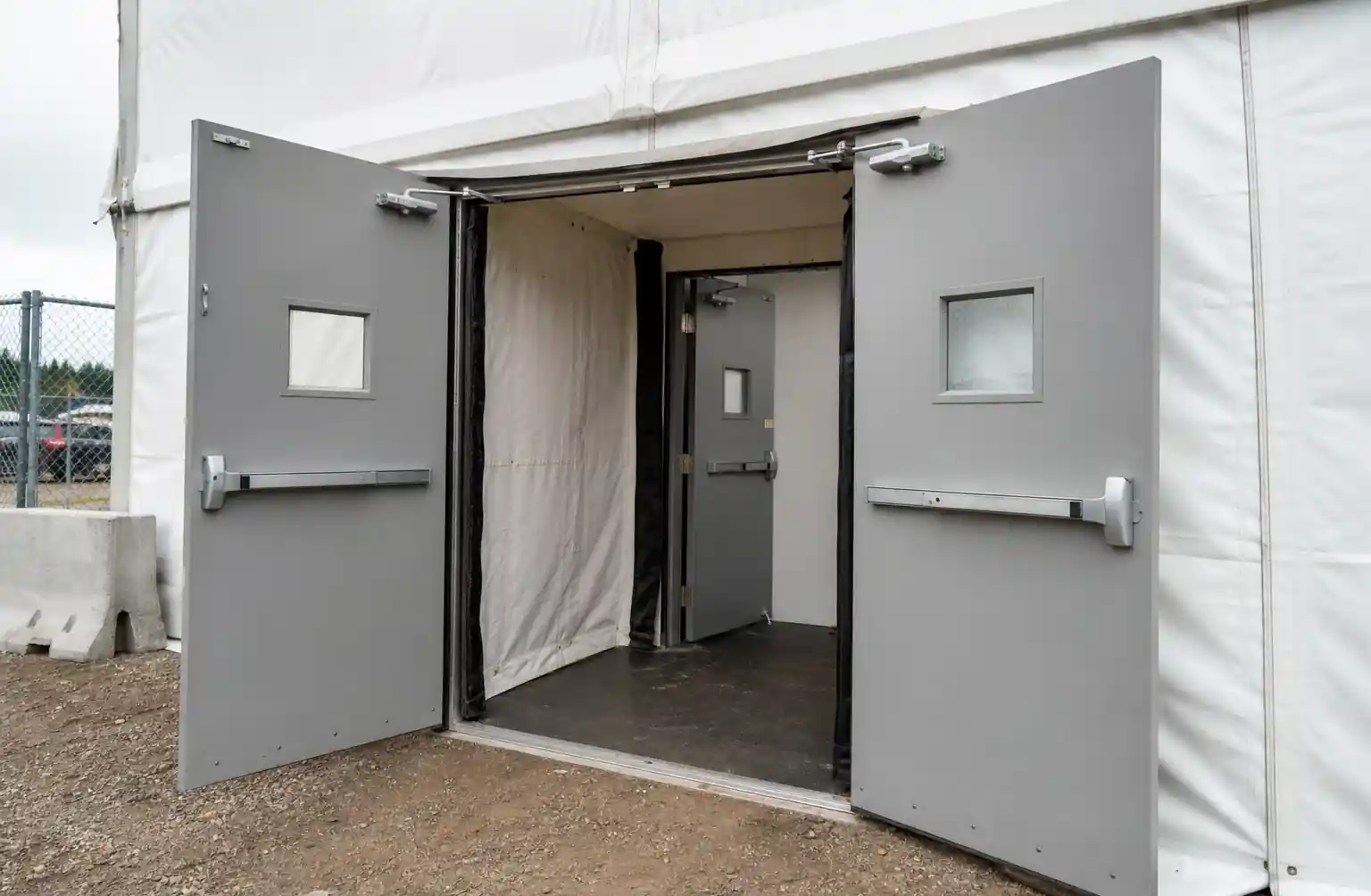 Airlock-style double-door tent entry with vestibule for dust storm protection
Entry points present the greatest dust infiltration risk. Installing airlock-style double-door entries with vestibule spaces reduces dust penetration by 70-80% compared to single-door configurations. The vestibule allows guests to brush off dust before entering the main space, and the pressure differential created by mechanical ventilation keeps dust from flowing inward.
For multi-day events during dust season, daily cleaning protocols become essential. Fabric surfaces accumulate visible dust layers that degrade aesthetic appearance and reflect poorly on event quality. Our operations teams perform dawn cleaning sweeps using microfiber mops and controlled water spray that captures dust without creating mud.
Positive air pressure inside the tent structure provides the most effective dust barrier. When mechanical ventilation maintains 2-5 Pascal pressure differential versus exterior, dust cannot infiltrate through small gaps because air constantly flows outward. This requires sealed tent configuration with controlled intake vents and adequate fan capacity.
6. Tent Type Comparison for African Conditions
A-frame tents offer cost-effective solutions for moderate climates but present limitations in extreme heat. The peaked roof design naturally sheds rain effectively, and the modular structure allows quick setup by experienced crews. However, interior pole obstructions limit layout flexibility, and the smaller spans (typically 3-15m) restrict capacity for large events.
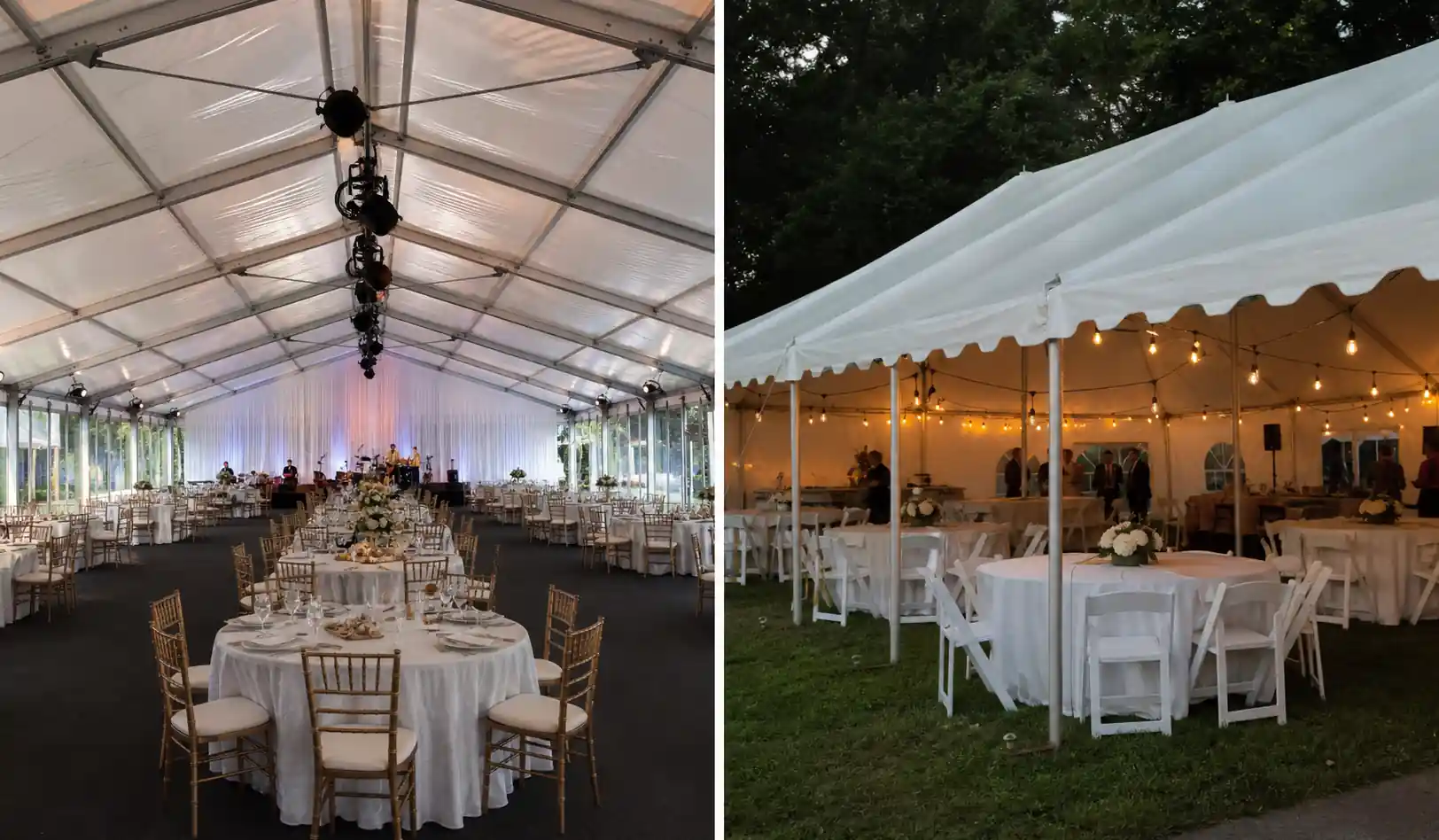 Side-by-side comparison of clear span and A-frame tent structures showing interior space differences
Clear span tents provide superior performance for African conditions due to column-free interiors that maximize airflow and eliminate heat pockets around support poles. The aluminum frame distributes loads efficiently, allowing spans up to 40m without interior supports. This design accommodates integrated HVAC systems more effectively and provides flexible interior layouts for various event types.
| Tent Type | Max Span | Setup Time | Heat Management | Best Use Cases |
|---|---|---|---|---|
| A-Frame Tent | 3-15m | 2-4 hours | Good with ventilation | Weddings, small corporate events |
| Clear Span Tent | 15-40m | 4-8 hours | Excellent with HVAC | Large festivals, exhibitions, sports |
| Geodesic Dome | 10-30m diameter | 6-10 hours | Superior airflow | Luxury events, brand activations |
| Pagoda Tent | 3-6m | 1-2 hours | Limited | VIP areas, merchandise zones |
Geodesic dome structures excel in wind resistance due to their aerodynamic profiles, making them ideal for coastal installations. The curved surface naturally deflects wind rather than presenting flat faces that catch full force. Dome designs also provide impressive visual impact for luxury weddings and brand activations, though higher costs and longer setup times limit their use for standard events.
Selection criteria should prioritize these factors: expected guest count determines minimum floor area (1.2-1.5 sqm per person for seated events, 0.8-1.0 sqm for standing reception), local wind loads establish required frame strength, and budget constraints balance performance against cost. For most African deployments, clear span aluminum frame tents with proper ventilation and UV-resistant fabric provide the optimal balance.
7. Regional Considerations Across Africa
West African coastal regions (Ghana, Nigeria, Cameroon) require maximum waterproofing with 3000mm+ hydrostatic head ratings and aggressive ventilation to combat humidity. The combination of heat and moisture creates particularly challenging conditions where condensation forms on interior tent surfaces without proper airflow. We deploy evaporative cooling systems cautiously in these zones because added humidity can worsen guest comfort.
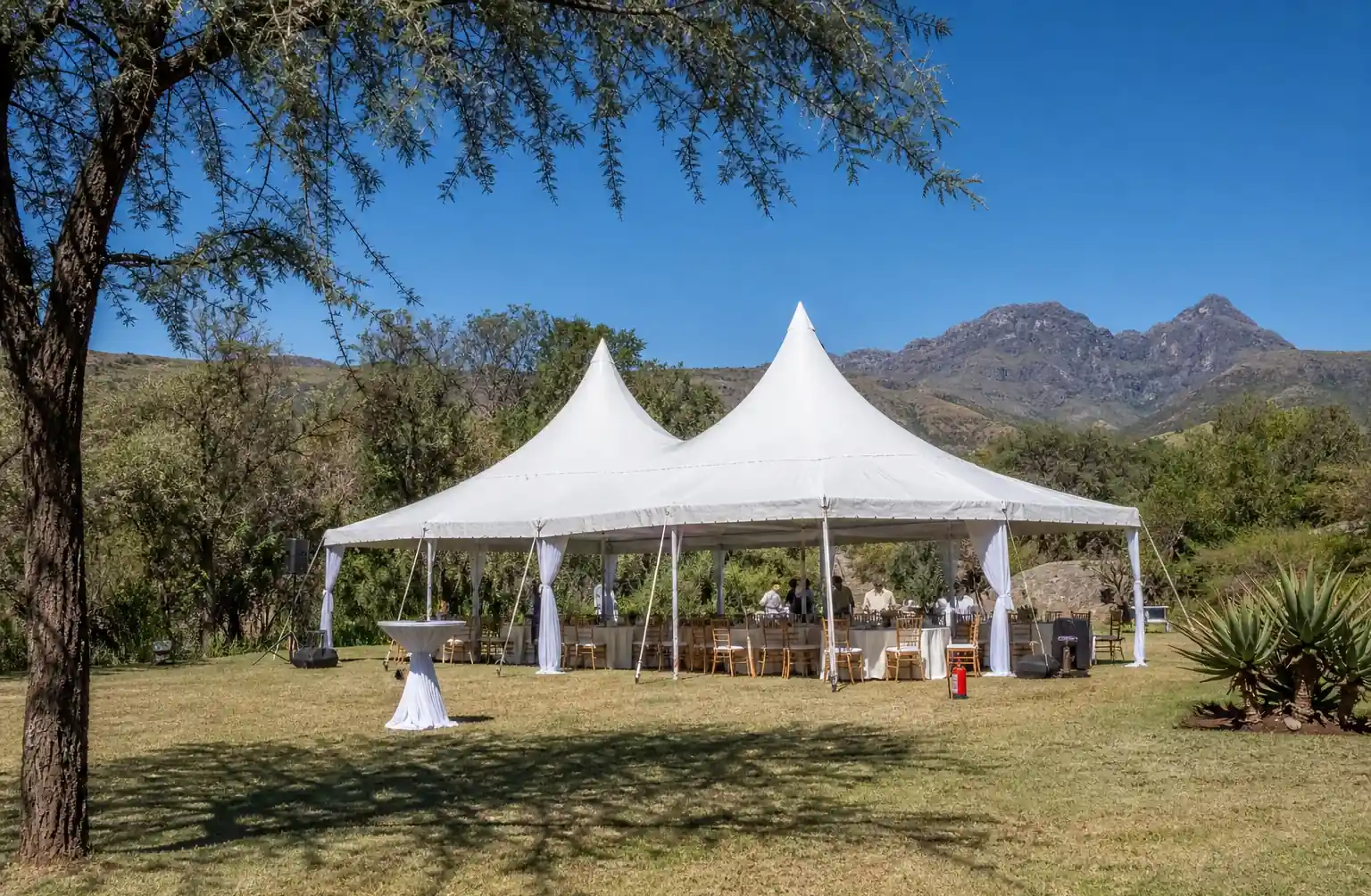 Event tent installation in East African highland region with intense UV exposure and afternoon clouds
East African highlands (Kenya, Tanzania, Ethiopia) present moderate temperatures but intense UV exposure due to elevation and equatorial positioning. UV index readings consistently hit 11-12 during dry seasons, requiring premium UV-resistant fabrics and double-layer roof systems. Sudden afternoon thunderstorms are common, making quick-deploy sidewalls essential for guest protection.
Southern Africa (South Africa, Botswana, Zimbabwe) experiences more moderate conditions but wider temperature swings between day and night. Events starting in 35°C afternoon heat may finish in 15°C evening temperatures, requiring adjustable ventilation systems that can close down for warmth retention. The region's well-developed infrastructure supports heavier equipment deployment including integrated HVAC systems.
Sahel regions (Mali, Niger, Chad, Northern Nigeria) face extreme heat, minimal rainfall, and severe dust storms. Dust protection takes priority over rain waterproofing, with sealed configurations and filtered ventilation systems. Light-colored fabrics reflecting maximum solar radiation become critical, and metal framework requires anti-corrosion coatings to withstand dust abrasion.
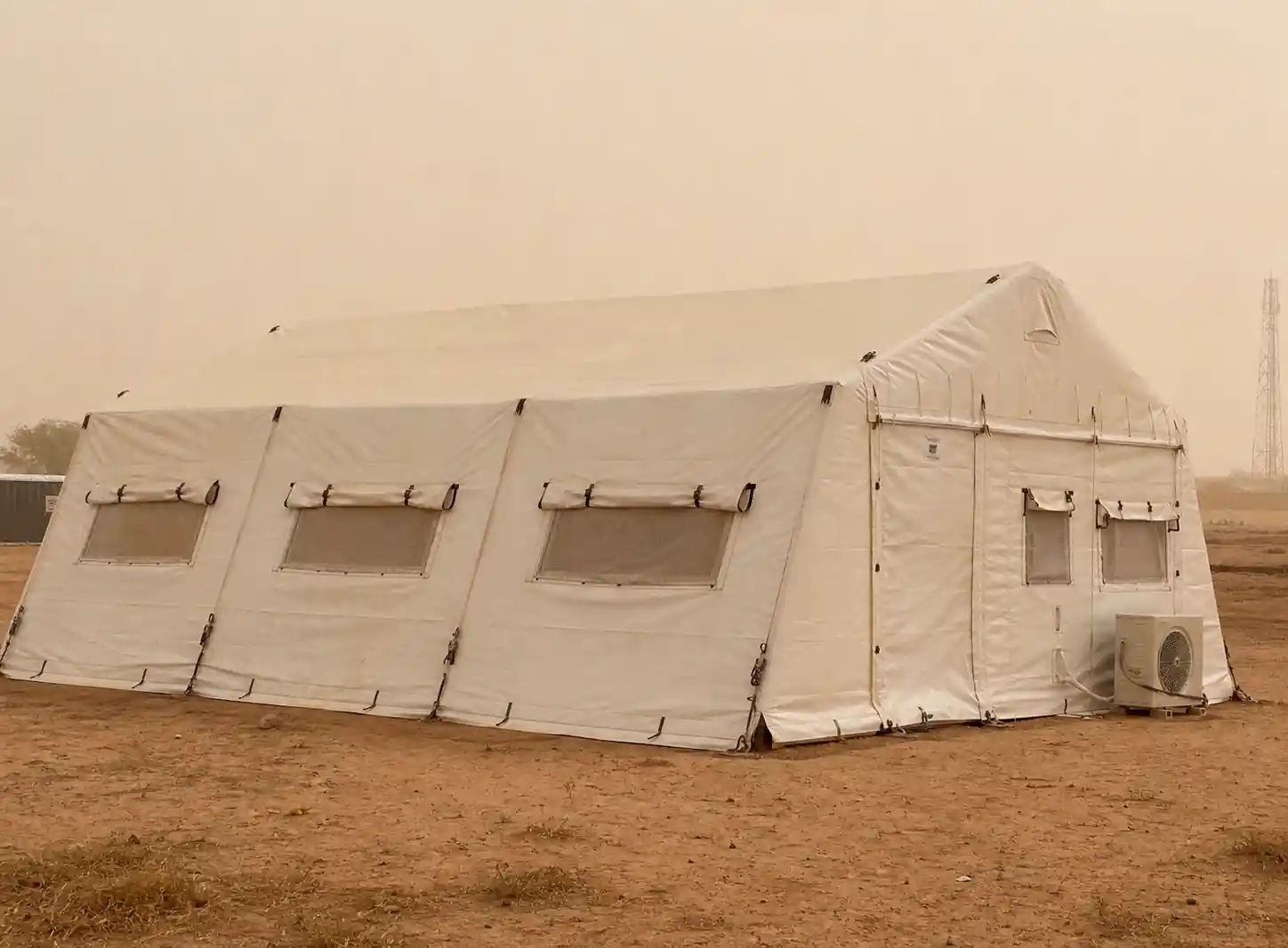 Sealed event tent structure in Sahel region during harmattan dust storm conditions
Coastal areas throughout the continent need corrosion-resistant aluminum frames rather than steel structures. Salt air accelerates metal degradation rapidly - we've observed significant steel frame corrosion within 6-12 months of coastal deployment versus 5-7 year lifespans inland. Aluminum frames with anodized or powder-coated finishes maintain structural integrity for 10+ years in coastal installations.
FAQs
What tent fabric is best for African sun exposure?
Heavy-duty 850g/sqm PVC-coated polyester with UV stabilizers and PVDF topcoat provides optimal performance. This specification maintains integrity for 7-10 years under equatorial sun versus 18-24 months for standard 650g/sqm fabric. Light colors (white, cream) reflect 70-80% of solar radiation, significantly reducing interior heat buildup.
How can I keep event tents cool in 40°C+ temperatures?
Combine double-layer roof systems (12-15°C temperature reduction) with evaporative cooling units (additional 10-15°C reduction) and ceiling fans for air circulation. Natural ventilation alone cannot overcome greenhouse effect in extreme heat. This integrated approach maintains comfortable 26-28°C interior conditions even when ambient temperatures exceed 40°C.
What anchoring system works in wet African soil?
Concrete anchoring or ballast weights (25-30 kg per point for structures up to 15m span) provide reliable holding in saturated soil. Standard ground stakes lose effectiveness when soil becomes waterlogged during monsoon rains. Larger structures require engineered foundation systems specified by structural professionals familiar with local soil conditions.
How do I protect tents from harmattan dust storms?
Install overlapping seams with weather stripping, deploy airlock-style double-door entries, and maintain positive air pressure (2-5 Pascal) inside the structure through mechanical ventilation. This prevents dust infiltration through small gaps. Filter screens on intake vents capture larger particles while maintaining necessary airflow.
What wind load rating do I need for coastal African events?
Minimum 80-100 km/h wind load capacity for coastal deployments where storm systems regularly generate 60-80 km/h sustained winds. Clear span aluminum frame tents engineered per EN 13782 standards provide required structural strength. Geodesic dome designs offer superior wind resistance due to aerodynamic profiles that deflect rather than catch wind force.
Which is better for African heat: A-frame or clear span tents?
Clear span tents provide superior heat management due to column-free interiors that maximize airflow and eliminate hot air pockets around interior support poles. The design accommodates integrated HVAC systems more effectively and allows flexible layouts for optimal ventilation. A-frame tents work for smaller events in moderate climates but present limitations in extreme heat conditions.
Conclusion
Successful outdoor events in African climates require tents specifically engineered for extreme UV exposure, temperature management, monsoon rainfall, and dust protection. Standard event structures fail under these demanding conditions, leading to guest discomfort and event disruptions. The investment in proper specifications - UV-resistant 850g/sqm fabric, double-layer roof systems, mechanical ventilation, and reinforced aluminum frames - proves cost-effective through extended service life and reduced failure rates.
If you need professional event tent solutions engineered for African climates, Velaria Spatia manufactures weather-resistant structures tested across Ghana, Kenya, and South Africa. Our aluminum frame systems with integrated ventilation and UV-resistant fabrics ensure guest comfort in the continent's most challenging environments. We have successfully deployed tents for luxury weddings, corporate events, music festivals, and sports tournaments across diverse African climate zones.
Contact us today for custom tent specifications, technical drawings, and competitive factory-direct pricing for your next African event.