


China Temporary Building Regulations: Tent Permits & Standards
Operating temporary structures in China requires navigating a complex regulatory framework that varies across provinces and municipalities. Recent enforcement tightening in 2025-2026 has made permit compliance critical for event organizers.
In this guide, we break down China's tent permit requirements, safety standards, application procedures, and regional variations. Understanding these regulations prevents costly delays and ensures smooth events.
Table of Contents
What Are Temporary Building Regulations in China?
Temporary buildings (临时建筑) in China are structures for use less than two years, including event tents, exhibition marquees, and temporary warehouses. The regulatory framework falls under the Construction Law of the People's Republic of China enforced through local Housing and Urban-Rural Development Bureaus.
China's approach differs from international frameworks like EN 13782 in Europe. You will need permits for any tent structure exceeding 50 square meters or intended for public gatherings of 50+ people. This threshold dropped from 100 square meters in 2024 following safety incidents at large-scale events.
Regulatory Authority Hierarchy
| Level | Authority | Jurisdiction | Key Responsibilities |
|---|---|---|---|
| National | Ministry of Housing (MOHURD) | Policy framework | Issues national construction standards (GB codes) |
| Provincial | Provincial Housing Department | Provincial interpretation | Adapts national standards to regional conditions |
| Municipal | City Urban Management Bureau | Permit issuance | Reviews applications, conducts inspections |
| District | District Safety Supervision Station | On-site enforcement | Verifies compliance during installation |
Understanding this hierarchy is critical because permit requirements vary dramatically between jurisdictions.
When Do You Need a Tent Permit?
Based on 2025-2026 regulations across major Chinese cities, you must obtain a temporary building permit when your structure meets any of these criteria:
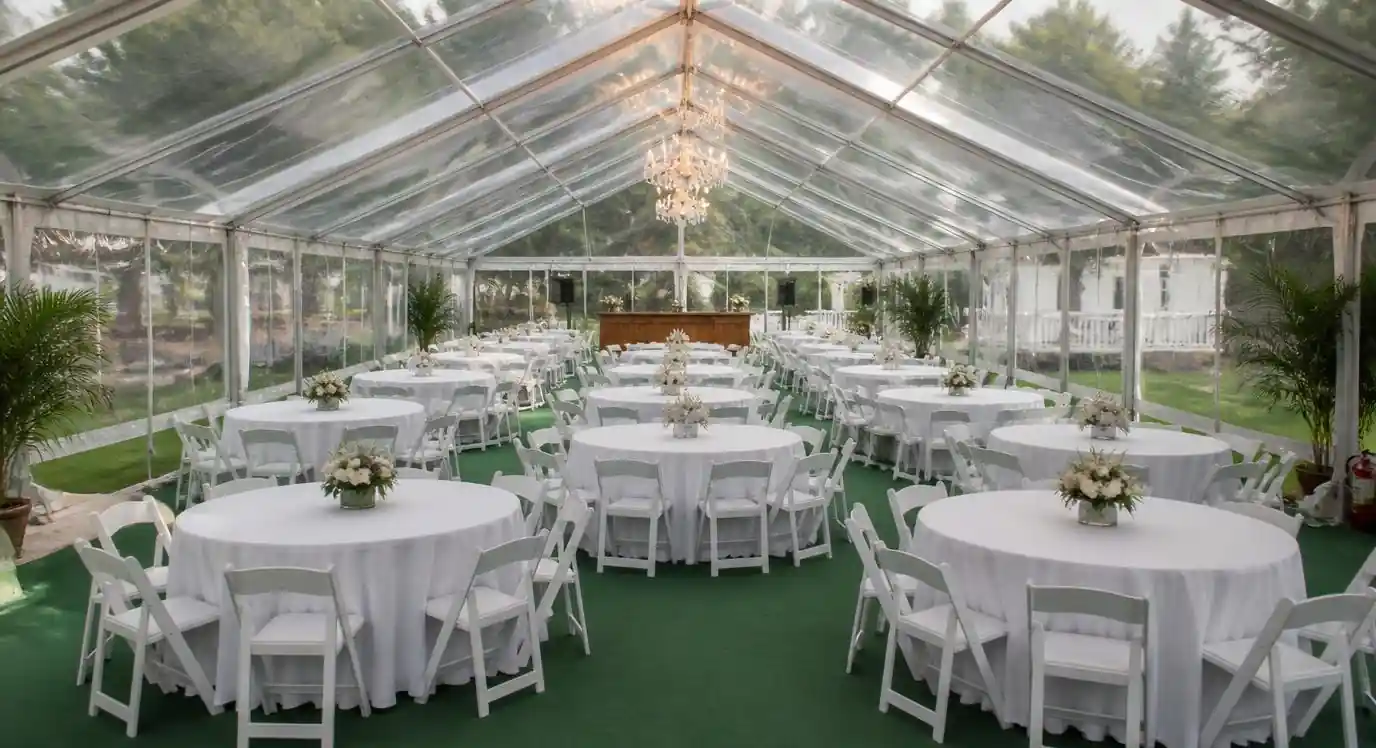 Event tent interior layout showing 50-person capacity threshold marking
Permit-Required Scenarios:
- Size threshold: Floor area exceeds 50 square meters (revised from 100 sqm in 2024)
- Duration: Structure remains erected for more than 7 consecutive days
- Capacity: Expected occupancy exceeds 50 people at any time
- Public access: Structure is accessible to the general public (exhibitions, festivals, weddings)
- Commercial use: Structure is used for commercial activities (pop-up restaurants, brand activations, retail)
Permit-Exempt Scenarios:
Small private events under 50 sqm with fewer than 50 attendees and structures used for less than 7 days may qualify for simplified procedures. Always verify with your local Urban Management Bureau.
Comparison: China vs International Requirements
| Jurisdiction | Size Threshold | Duration Limit | Public Limit | Approval Timeline |
|---|---|---|---|---|
| China (Tier-1) | 50 sqm | 7 days | 50 people | 15-30 days |
| China (Tier-2/3) | 100 sqm | 14 days | 100 people | 7-15 days |
| European Union | None (EN 13782) | Event-based | Capacity-based | 5-10 days |
| United States | Varies (120 sqm typical) | 180 days | 300 people | 7-21 days |
China's stricter thresholds and longer approval timelines require earlier planning than most Western markets.
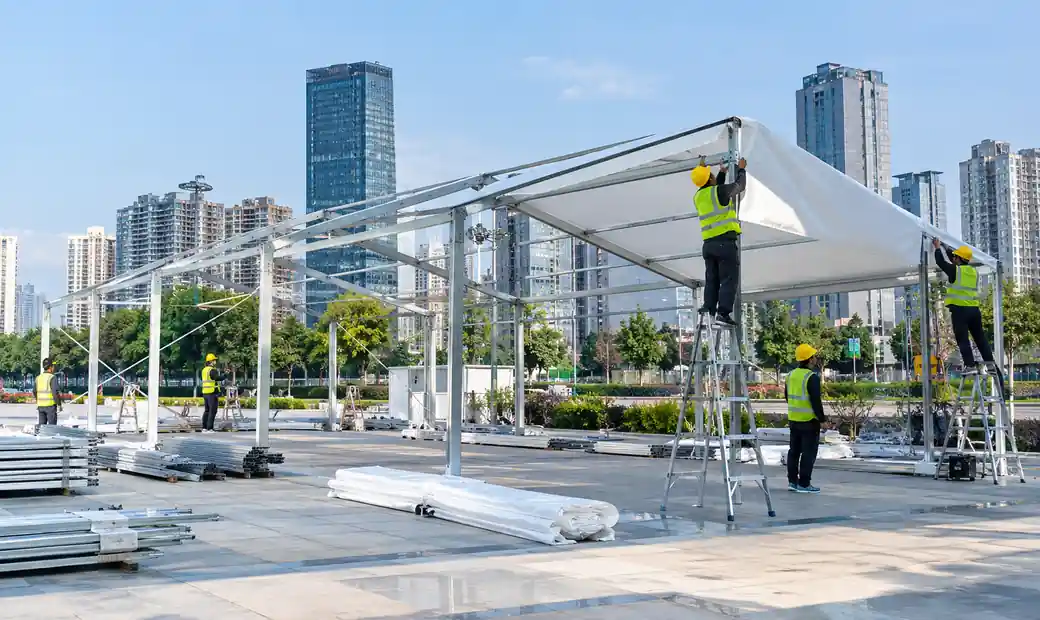 Large clear span tent being installed in Chinese urban setting
Key Standards: GB 50017 and GB 50009
China's temporary structure safety relies on two national standards that every tent supplier and event organizer must understand.
GB 50017: Steel Structure Design Standard
GB 50017-2017 governs structural design for all steel and aluminum frame tents. This standard mandates:
Frame Material Requirements:
- Aluminum alloy frames must meet GB/T 5237 extrusion standards
- Steel frames require Q235 or Q345 grade steel per GB/T 700
- All welded joints must be certified by qualified welders
- Corrosion protection for outdoor use (galvanization or powder coating)
Load Calculations: You must provide engineering calculations demonstrating the structure can withstand:
- Dead load: Self-weight of frame, fabric, and equipment
- Live load: Occupancy load (2.5 kN/m² for assembly areas per GB 50009)
- Wind load: Minimum 0.55 kN/m² for coastal regions, 0.40 kN/m² inland
- Snow load: Regional-specific (Beijing 0.40 kN/m², Harbin 0.70 kN/m²)
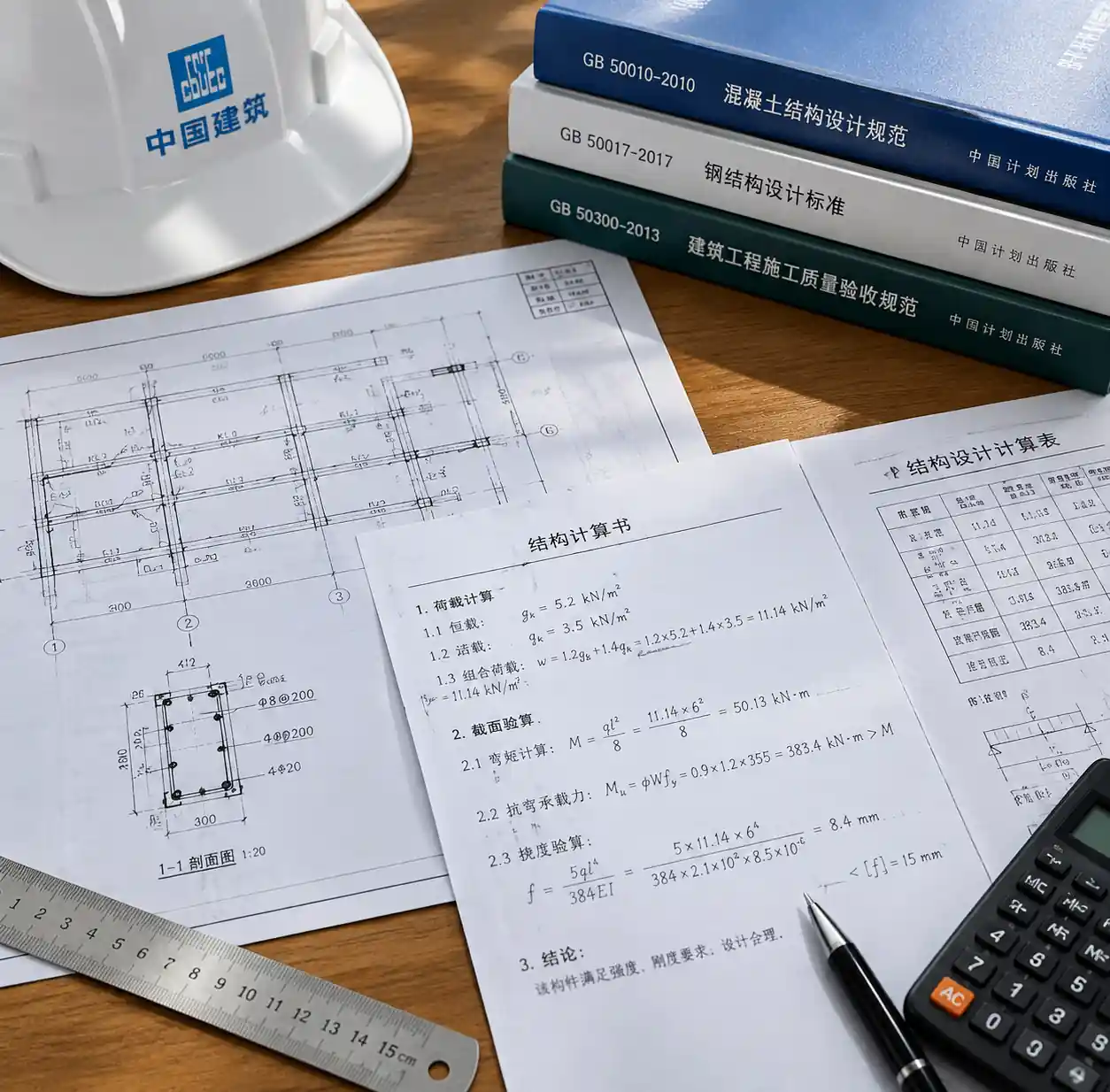 Engineering load calculation documents for tent structure per GB 50017 standard
GB 50009: Building Structure Load Code
GB 50009-2012 specifies load calculation methods and requires minimum safety factors of 1.4 for temporary structures.
Velaria Spatia manufactures all clear span tents and A-frame structures to exceed GB 50017 requirements, with engineering documentation provided for every project. Our structures routinely achieve wind load ratings of 100 km/h (0.65 kN/m²), surpassing typical permit requirements across all Chinese provinces.
Permit Application Process
Obtaining a temporary building permit in China typically requires 15-30 business days in major cities. Here's the step-by-step process based on our experience with over 200 permitted projects nationwide.
Step 1: Pre-Application Site Assessment (Days 1-3)
Conduct a site visit to document GPS coordinates, ground conditions, and proximity to permanent structures. The Urban Planning Department may require a site suitability letter for parks or historic districts.
Step 2: Engineering Documentation Preparation (Days 4-8)
Required Documents:
- Structural engineering report with load calculations per GB 50017/50009
- Tent specifications with material certificates and fire-retardancy test reports
- Foundation and anchoring plan
- Site layout plan with emergency exits
- Safety management plan
- Business license and site lease agreement
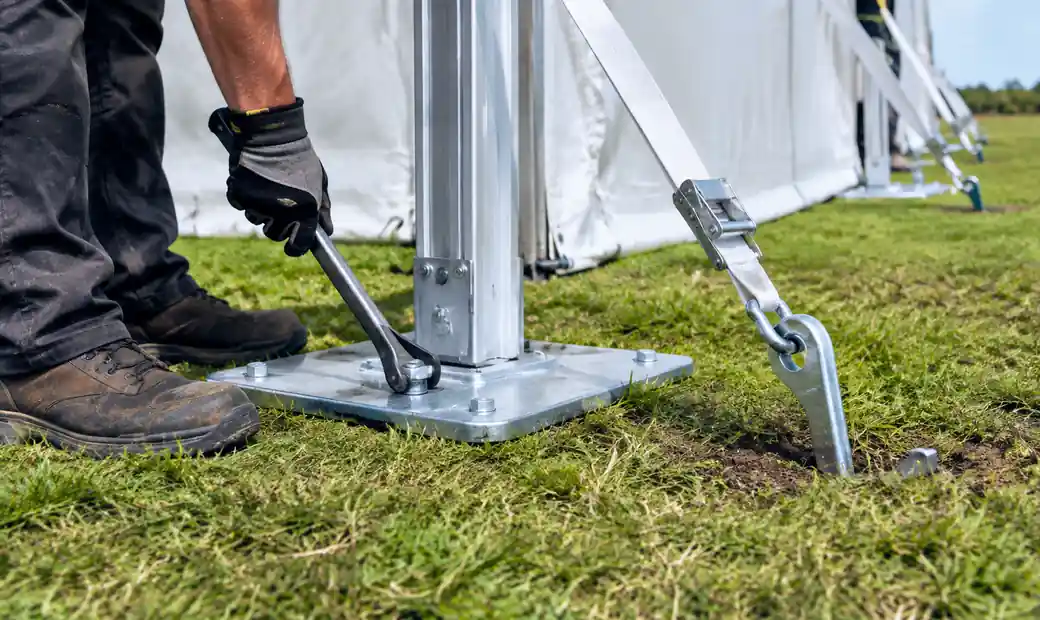 Tent foundation and anchoring system installation ground work
Most tent manufacturers provide items 1-4 as standard deliverables. Velaria Spatia includes complete engineering documentation with all wedding marquee and exhibition tent projects.
Step 3: Application Submission (Days 9-10)
Submit your package to the Municipal Urban Management Bureau (城管局), either via online portal or in-person with stamped hard copies.
Step 4: Multi-Department Review (Days 11-25)
Your application circulates through Fire Department, Safety Supervision Station, Urban Planning Department, and Environmental Protection Bureau. Each has 5-7 working days to complete their review.
Step 5: Permit Issuance and Fee Payment (Days 26-30)
Upon approval, you receive a Temporary Building Permit (临时建筑许可证) valid for 30-180 days. Permit fees vary by city and structure size:
Typical Fee Structure:
- Base fee: ¥500-2,000
- Area fee: ¥5-15 per sqm
- Inspection: ¥300-800
Example: 300 sqm wedding marquee in Shanghai = ¥4,100 total.
Regional Variations: Tier-1 vs Tier-2 Cities
Permit requirements and enforcement intensity vary dramatically across China's urban hierarchy.
Tier-1 Cities (Beijing, Shanghai, Guangzhou, Shenzhen)
- Strictest enforcement with active inspection patrols
- Mandatory third-party engineering review for structures over 200 sqm
- Heavy penalties for unpermitted structures (¥10,000-50,000 fines + mandatory removal)
- Approval timeline: 20-30 business days
Special Restrictions:
- Beijing: Additional approvals within 5km of Tiananmen Square
- Shanghai: Lujiazui and Bund areas require district leadership approval
- Shenzhen: English-language safety signage mandated in Futian/Nanshan districts
Tier-2 and Tier-3 Cities
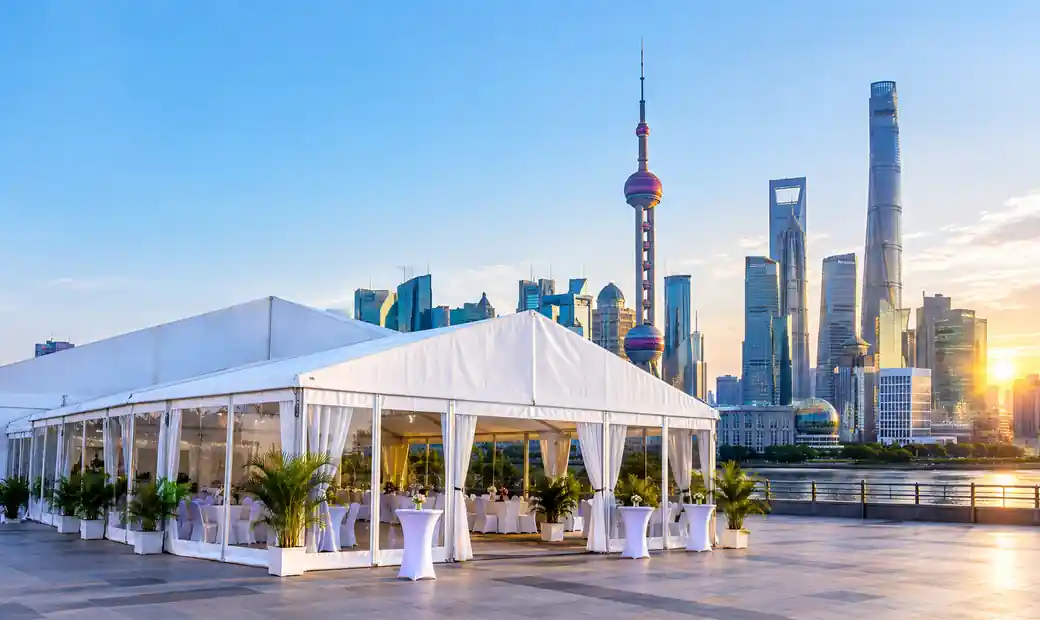 Professional event tent installation in Chinese tier-1 city location
- More flexible interpretation of 50 sqm threshold
- Simplified review process with fewer department approvals
- Moderate penalties (¥5,000-20,000 fines)
- Approval timeline: 10-20 days (Tier-2), 5-10 days (Tier-3)
| City Tier | Avg Permit Cost | Processing Time | Third-Party Review | Inspection Frequency |
|---|---|---|---|---|
| Tier-1 | ¥3,000-8,000 | 20-30 days | Mandatory (>200 sqm) | Pre-event + daily |
| Tier-2 | ¥1,500-4,000 | 10-20 days | Optional | Pre-event + spot checks |
| Tier-3 | ¥500-2,000 | 5-10 days | Not required | Pre-event only |
Safety Inspection Requirements
Chinese regulations require multiple inspection points throughout a structure's lifecycle.
Pre-Installation Inspection
Before erection, the Safety Supervision Station verifies ground conditions, foundation equipment, and emergency access. This inspection must occur within 48 hours of installation start.
Post-Installation Certification
Within 24 hours of completion, a certified inspector verifies frame assembly, anchor points, fabric tensioning, emergency exits, electrical installations, and fire extinguishers (minimum 4kg ABC type, one per 50 sqm). The inspector issues a Completion Acceptance Certificate required before occupancy.
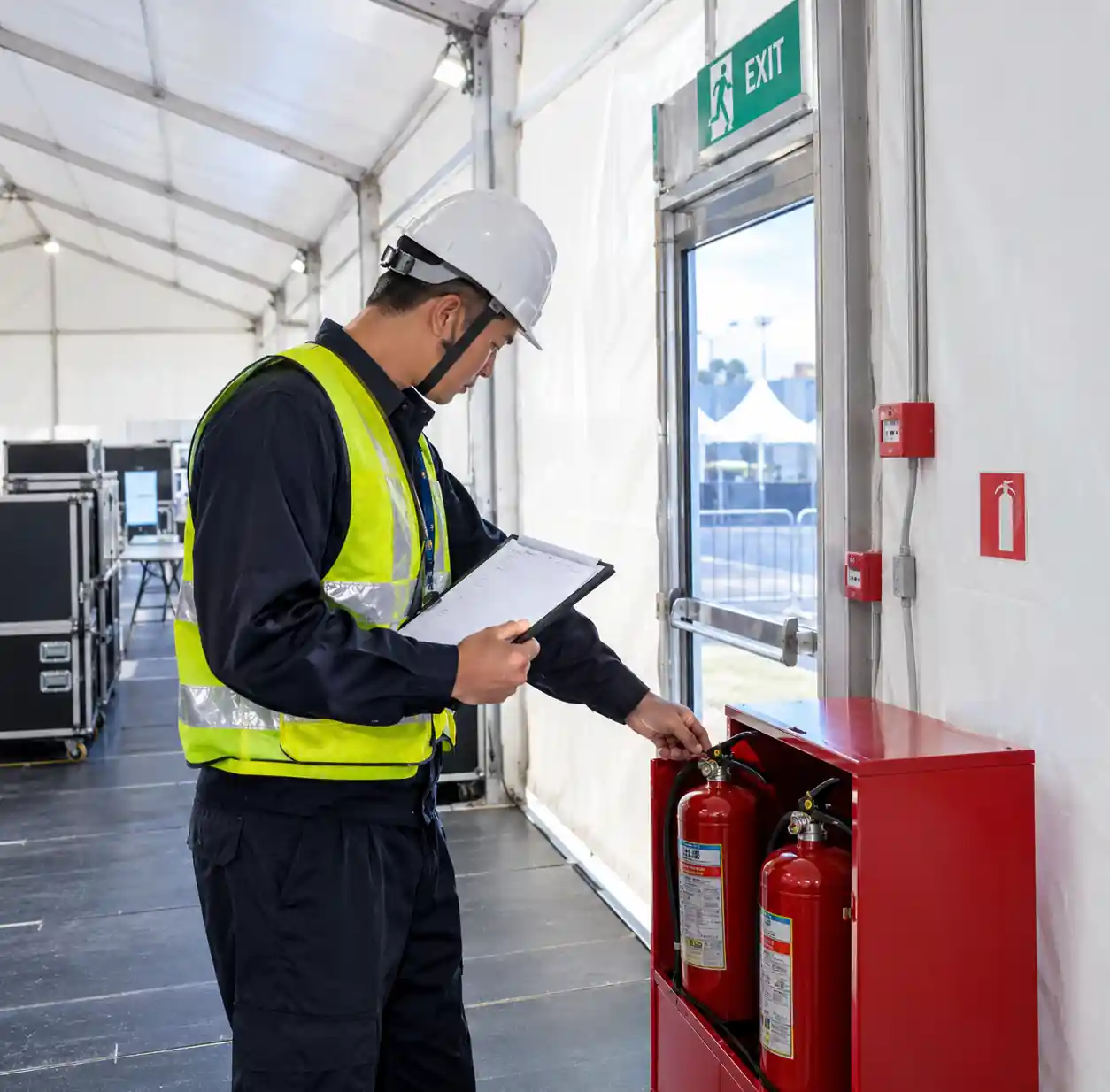 Safety inspector checking fire safety equipment inside event tent
Operational Period Inspections
For events over 7 days:
- Daily self-inspections documenting weather and structural condition
- Weekly third-party inspections for structures over 500 sqm
Velaria Spatia provides installation teams trained in Chinese safety protocols and can coordinate all required inspections through our local partners. Our brand activation roadshow and sports event infrastructure projects include full compliance management.
Common Compliance Challenges
Challenge 1: Engineering Documentation Gaps
Many international tent suppliers provide EN 13782 certifications, which Chinese authorities do not recognize as GB 50017 equivalent. Work with manufacturers who provide GB-compliant engineering reports. Velaria Spatia includes GB-standard calculations with every project.
Challenge 2: Fire Safety Material Certification
Fabric fire retardancy certificates from overseas labs are frequently rejected. Specify fabrics tested to GB/T 17591 or GB 8624 Class B1 standards.
Challenge 3: Last-Minute Venue Changes
Permits are location-specific. Venue changes require new applications. Identify backup venues early and submit contingent applications when possible.
Challenge 4: Language Barriers
Permit reviewers require all engineering documents in simplified Chinese. Partner with suppliers who provide bilingual documentation.
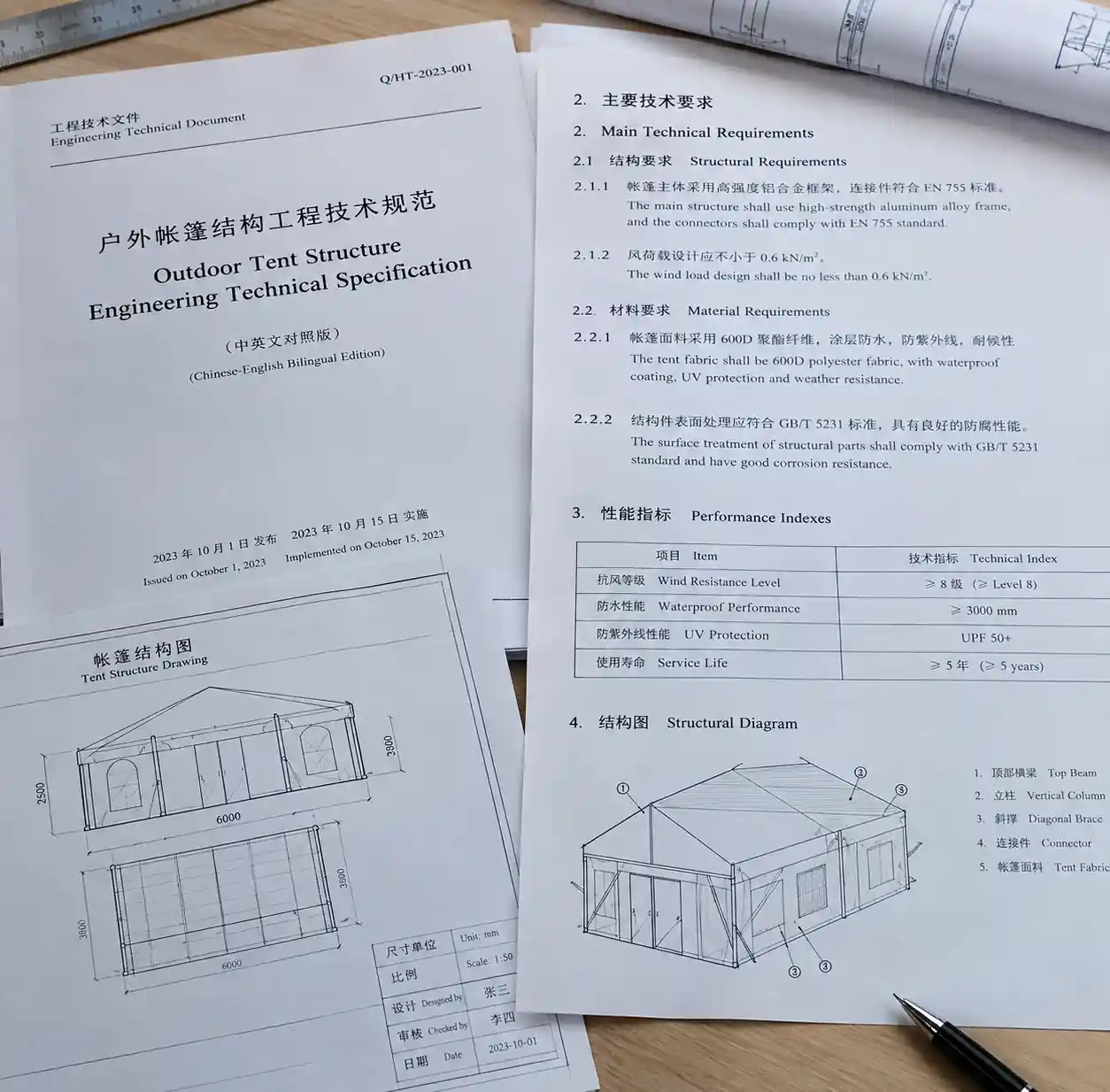 Bilingual Chinese-English technical documentation for tent structures
FAQ
How long does a temporary building permit last in China?
Permits are valid for the specific duration stated in your application, typically 30-180 days. Extensions require reapplication 15 days before expiration.
Can foreign companies apply for tent permits?
Foreign entities must apply through a Chinese business entity (wholly-owned subsidiary, representative office, or local partner). Your Chinese business license and tax registration are required documents.
What happens if you operate without a permit?
Unpermitted structures face immediate stop-work orders, fines of ¥10,000-50,000 in Tier-1 cities (¥5,000-20,000 in smaller cities), and mandatory structure removal within 24-48 hours.
Do wedding tents in hotels require permits?
Tents under 50 sqm with fewer than 50 guests typically do not require permits if the hotel assumes responsibility. However, structures exceeding these thresholds or lasting more than 7 days require full permitting regardless of venue type.
Are there different requirements for temporary warehouses?
Yes. Industrial storage tents used as temporary warehouses face additional scrutiny. Storage of hazardous materials or food products triggers Environmental Protection Bureau review.
How do Chinese standards differ from EN 13782?
Chinese GB 50017 focuses on structural engineering calculations and load-bearing capacity, while EN 13782 emphasizes product testing and certification. GB standards require site-specific engineering reports for each installation, whereas EN certification is product-level.
Can permits be expedited?
Some jurisdictions offer expedited review (7-10 days) for an additional fee (typically 2-3× standard cost). This is more common in Tier-2/3 cities and for government-sponsored events.
Conclusion
Navigating China's temporary building regulations requires early planning and complete documentation. The 15-30 day permit timeline, GB 50017/50009 compliance, and ongoing inspections differ substantially from international norms. Start your permit process at least 45 days before events in Tier-1 cities.
Velaria Spatia offers complete permit coordination with GB-compliant engineering documentation and local inspection support across major Chinese cities. Contact us today for China-compliant event tent solutions with full regulatory support.