


Tent Insurance Guide: Coverage for Events & Temporary Structures
When planning events with temporary structures like marquees and tents, insurance is not just a checkbox—it's your financial safety net. Whether you're hosting a wedding, exhibition, or corporate event, understanding tent insurance can save you from devastating losses. This guide explains what coverage you need, typical costs, and how to protect your investment.
Table of Contents
- 1. What Is Tent Insurance?
- 2. Why Event Tent Insurance Is Essential
- 3. Types of Tent Insurance Coverage
- 4. What Tent Insurance Typically Covers
- 5. Common Exclusions You Should Know
- 6. Insurance Requirements by Event Type
- 7. How Much Does Tent Insurance Cost?
- 8. Choosing the Right Coverage
- 9. FAQ
- 10. Conclusion
What Is Tent Insurance?
Tent insurance is specialized coverage designed to protect temporary structures and the events they host. It combines property protection for the physical tent structure with liability coverage for accidents that occur during your event.
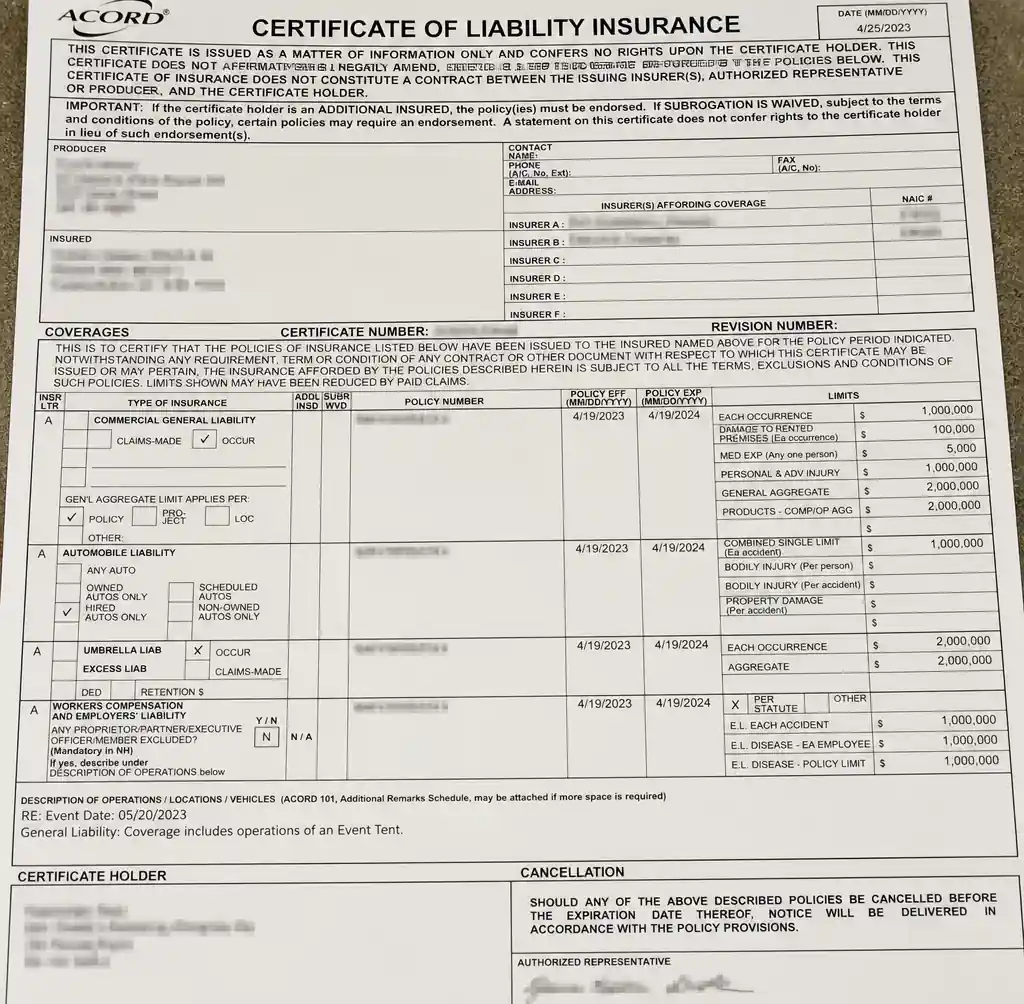 Tent insurance certificate of insurance document for event venue
Most venues and municipalities require proof of insurance before issuing permits for temporary structures. According to Seattle's special events policy, events require a minimum $1,000,000 general liability coverage per occurrence. Philadelphia has identical requirements for tent permits.
Why Event Tent Insurance Is Essential
Temporary structures face unique risks that standard event insurance may not cover. Wind can launch an unweighted canopy into nearby vehicles or injure guests. Heavy rain can cause water pooling that collapses roof sections. Equipment failure can lead to structural damage.
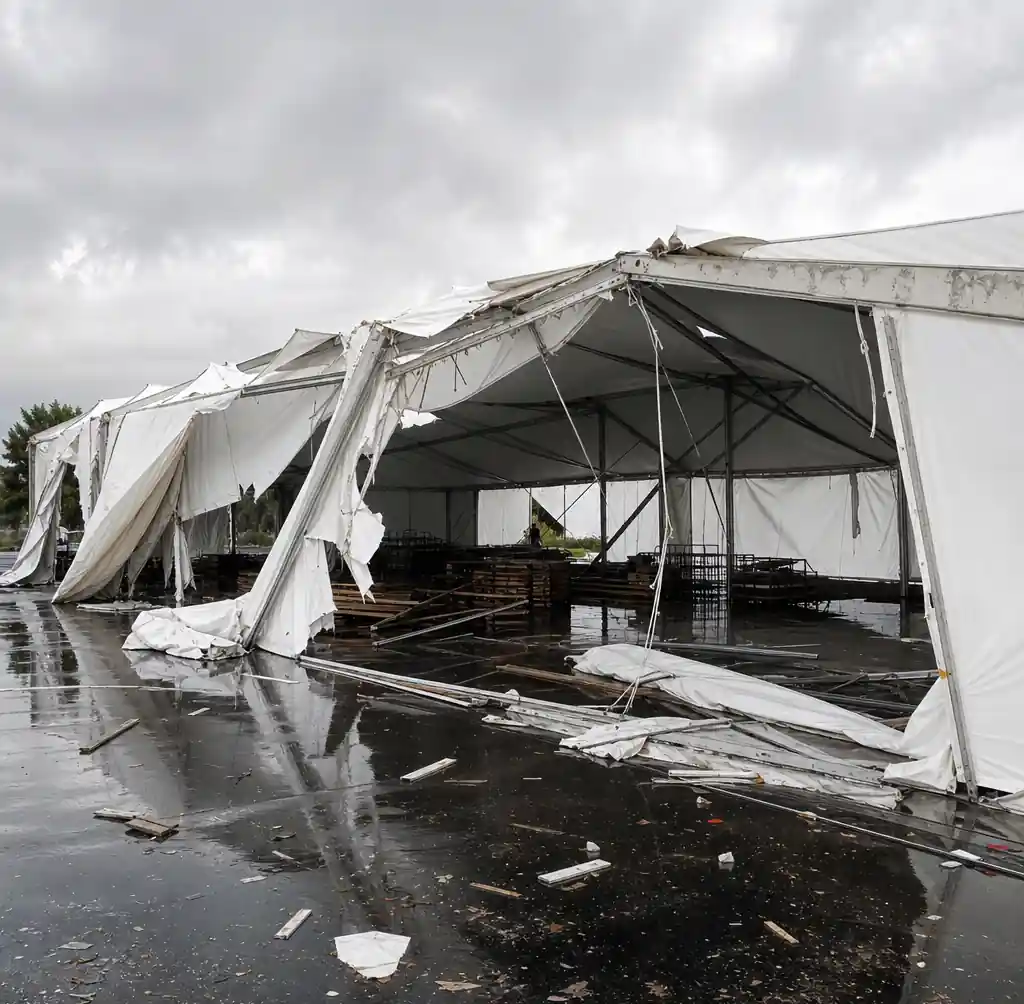 Storm damaged event tent showing wind and weather damage
Beyond physical risks, liability exposure is significant. If a guest is injured by a falling tent pole or trips over anchoring cables, you could face lawsuits exceeding $100,000. Insurance transfers this financial risk to the insurer, protecting your personal and business assets.
For tent rental companies, commercial insurance is non-negotiable. As outlined in Beyond Tent's insurance guide, general liability responds to third-party bodily injury and property damage—exactly what venues demand.
Types of Tent Insurance Coverage
Understanding the different coverage types helps you build comprehensive protection.
| Coverage Type | What It Protects | Who Needs It |
|---|---|---|
| General Liability | Third-party injuries and property damage at your event | All event organizers |
| Property/Equipment Coverage | Physical damage to the tent structure itself | Tent owners and rental companies |
| Weather Damage Coverage | Storm, wind, hail, and flood damage to structures | Events in high-risk weather zones |
| Cancellation Insurance | Lost deposits if weather forces event cancellation | Weddings and large-scale events |
| Liquor Liability | Alcohol-related incidents at events serving liquor | Events with bar service |
General liability is the foundation. Event venue insurance requirements typically demand $1,000,000 per occurrence and $2,000,000 aggregate, with the venue named as an additional insured.
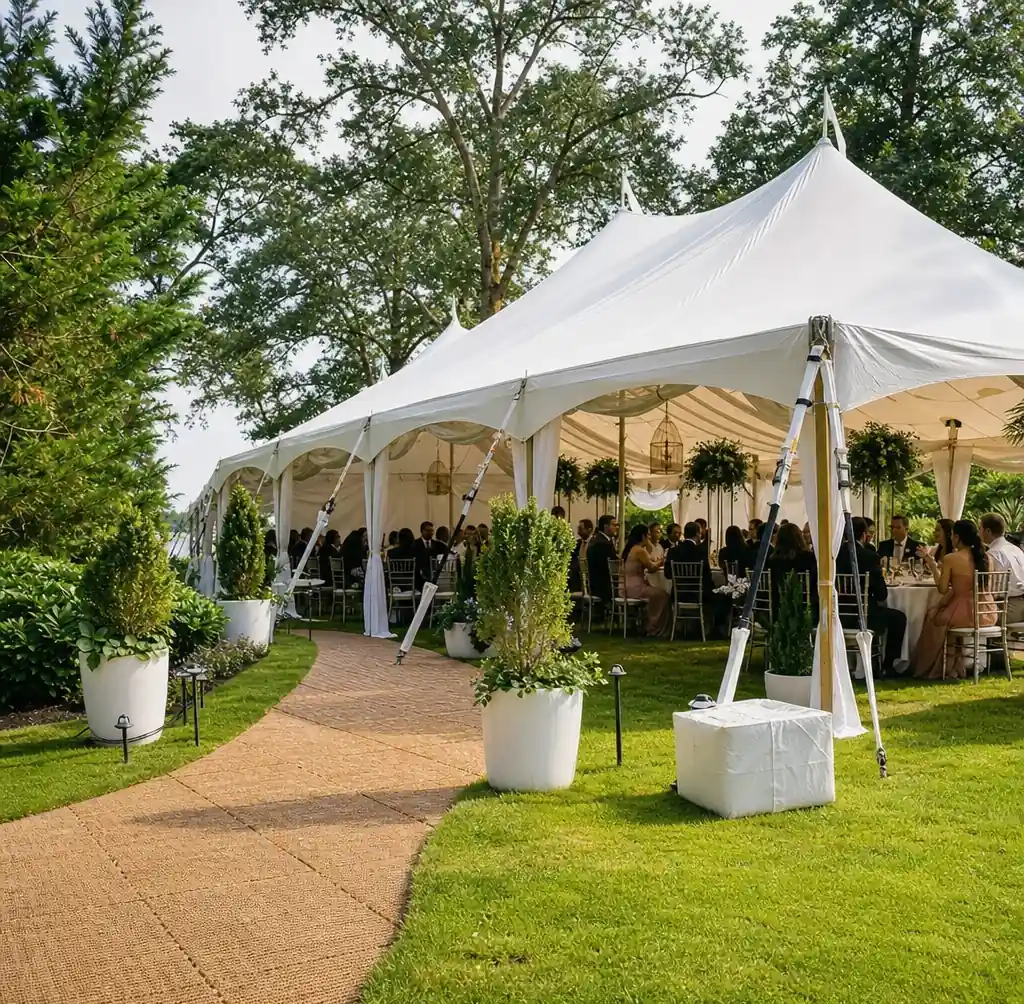 Professional wedding marquee tent with guests and safety setup
What Tent Insurance Typically Covers
Most tent insurance policies cover:
Physical Structure Damage: Fire, theft, vandalism, storm damage, collapse from snow load or water pooling. Marquee equipment hire insurance typically includes flood and storm coverage as standard.
Third-Party Liability: Medical expenses, legal defense costs, and settlements if someone is injured on your premises or if your tent damages adjacent property.
Equipment and Contents: Tables, chairs, flooring, lighting, heating systems, and other rented equipment installed within the structure.
Setup and Breakdown Coverage: Protection during installation and dismantling periods when structural failure risks are highest.
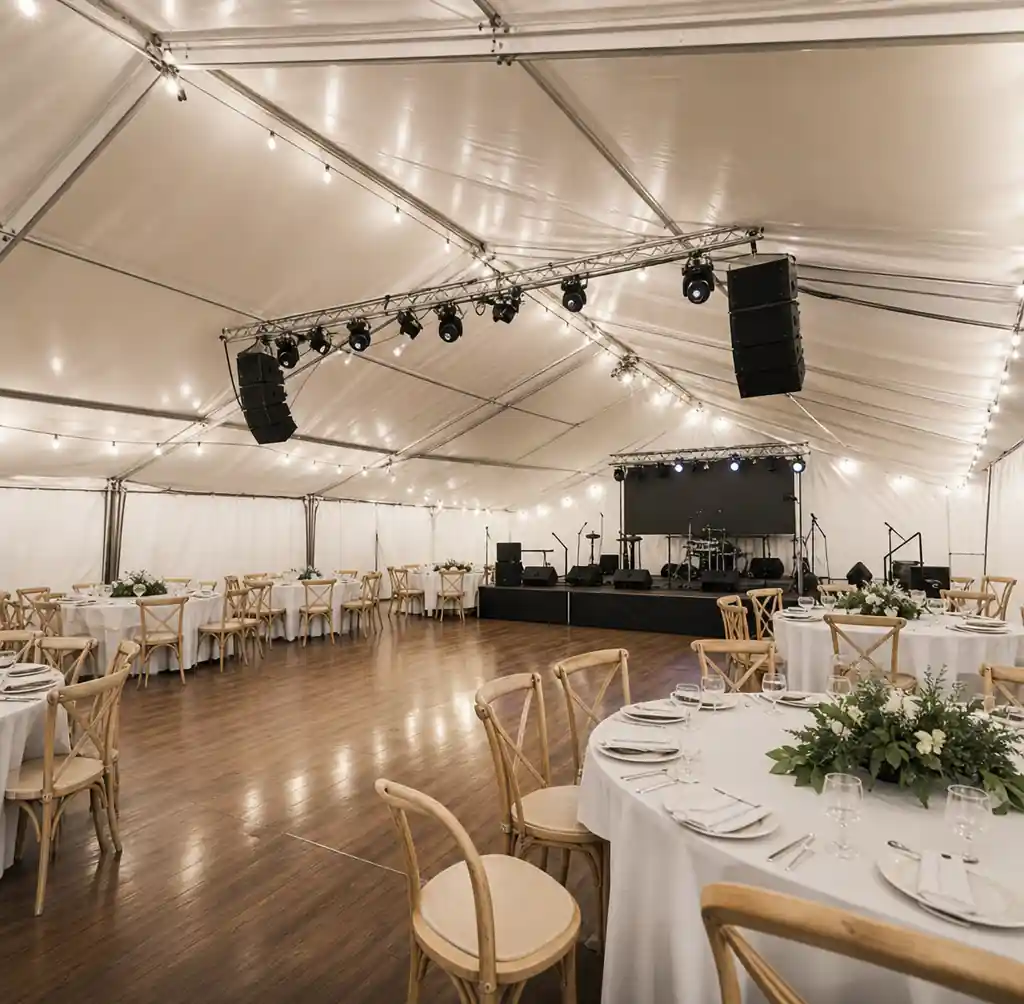 Event tent interior with tables chairs lighting and equipment
Weather-related claims are common. Comprehensive coverage includes wind damage up to rated wind loads (typically 60-100 km/h), hail damage to fabric panels, and lightning strikes that damage electrical systems.
Common Exclusions You Should Know
Understanding what's not covered prevents nasty surprises during claims:
| Exclusion Category | What's Not Covered | Why It Matters |
|---|---|---|
| Pre-Existing Damage | Worn fabric, rust, structural defects present before policy started | Requires pre-event inspection documentation |
| Improper Installation | Damage from incorrect anchoring, inadequate ballast, or non-compliant setup | Must follow manufacturer specifications |
| Extreme Weather Beyond Ratings | Hurricane-force winds exceeding tent's certified wind rating | Check your tent's wind load certificate |
| Intentional Acts | Vandalism by event organizers, deliberate misuse | Standard across all insurance |
| Wear and Tear | Gradual deterioration, UV degradation, normal aging | Covered under maintenance, not insurance |
Most policies exclude damage when tents remain erected beyond 180 days. For temporary warehouse storage solutions requiring longer installation periods, specialized long-term coverage is necessary.
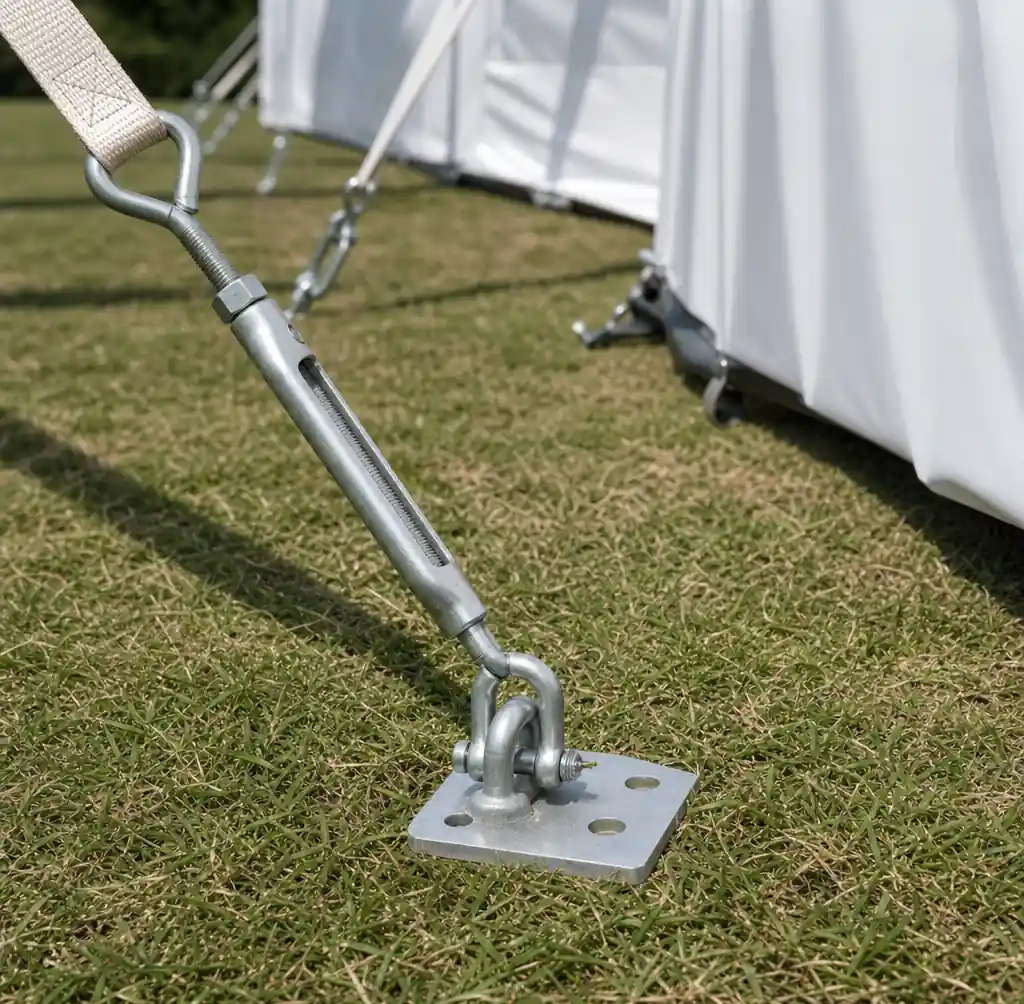 Proper tent anchoring with ballast weights and ground stakes
Insurance Requirements by Event Type
Different events face varying insurance requirements and risk profiles.
Weddings and Private Events: Venues typically require $1,000,000 general liability. Wedding marquee policies should include liquor liability if serving alcohol. Cancellation coverage protects $15,000-50,000 deposits if weather forces rescheduling.
Corporate and Exhibition Events: Exhibition tent setups need higher limits ($2,000,000-5,000,000) due to larger crowds. Equipment coverage should extend to exhibitor property. Many events also require worker's compensation for setup crews.
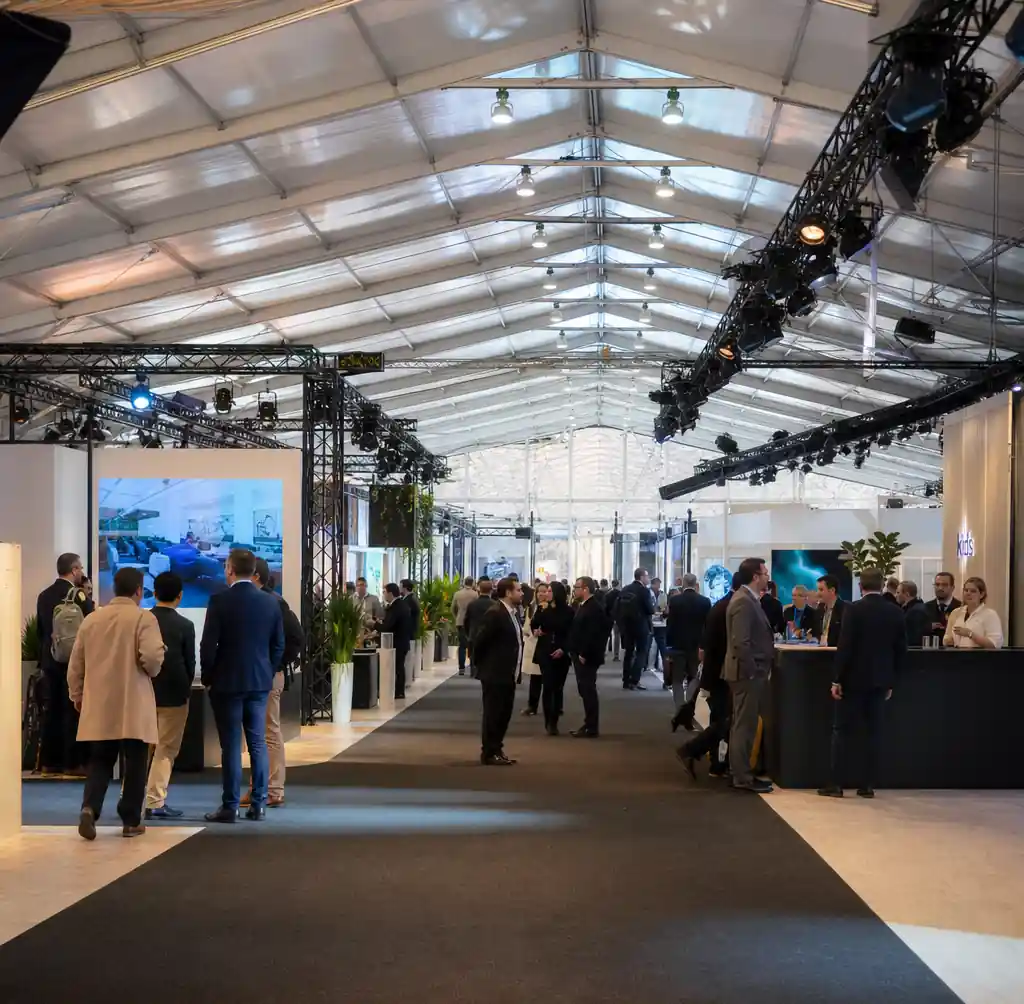 Large corporate exhibition tent with attendees and exhibitors
Festivals and Music Events: Large-scale events with 1,000+ attendees need comprehensive coverage including multiple tent structures, stages, and vendor areas. Our music festival project case study demonstrates the infrastructure complexity requiring specialized policies.
Sports Tournaments: Coverage for sports event tent infrastructure includes spectator injuries, equipment storage, and medical tent operations. Many sports governing bodies mandate minimum coverage levels.
Restaurant and Hospitality: Restaurant marquee solutions require health department compliance and extended liability for food service operations.
How Much Does Tent Insurance Cost?
Insurance costs vary based on event size, duration, location, and coverage limits.
Single-Event Coverage: Policies start around $75-235 for basic events. GEICO's event insurance ranges from $75-235 depending on coverage limits chosen. Small vendor events with pop-up shop insurance start at $49 per event.
Annual Commercial Policies: Tent rental businesses typically pay $2,500-7,500 annually for comprehensive coverage including general liability ($2,000,000), equipment coverage ($100,000-500,000), and commercial auto for transport vehicles.
| Event Size | Duration | Typical Cost Range | Coverage Limits |
|---|---|---|---|
| Small (50-100 guests) | 1-2 days | $75-150 | $1,000,000 liability |
| Medium (100-300 guests) | 2-3 days | $150-400 | $1,000,000-2,000,000 liability |
| Large (300-1,000 guests) | 3-7 days | $400-1,200 | $2,000,000+ liability |
| Commercial rental | Annual | $2,500-7,500 | Full commercial coverage |
Cost factors include weather risk (coastal regions cost more), alcohol service (adds 15-30%), high-value equipment (increases premiums), and claims history (previous claims raise rates).
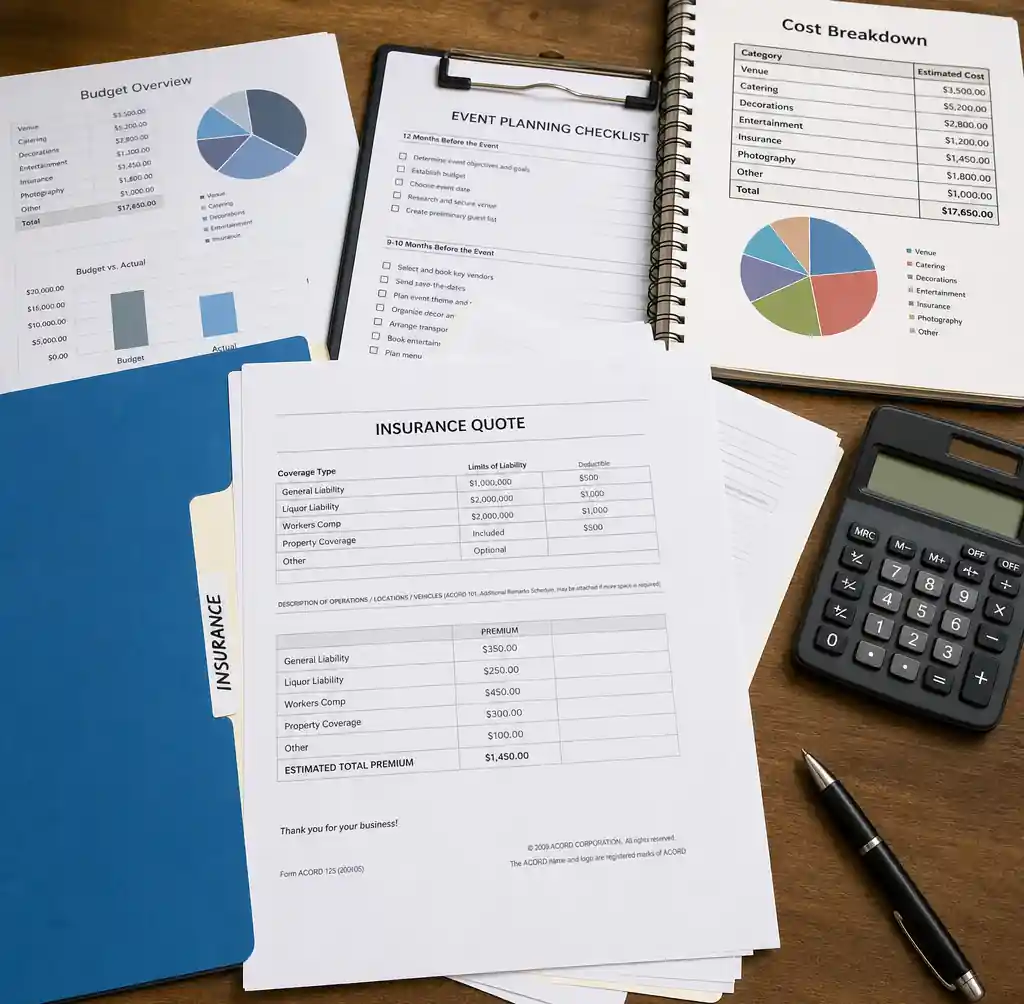 Event planning documents with insurance quote and budget calculations
Choosing the Right Coverage
Select insurance that matches your specific risk profile.
Step 1: Assess Your Requirements
Check venue contracts, permit requirements, and vendor agreements. Most specify minimum coverage amounts and require you to name them as additional insureds.
Step 2: Calculate Asset Value
For tent owners, insure the replacement cost. A quality A-frame tent costs $8,000-25,000, while geodesic dome structures range $15,000-60,000 depending on size.
Step 3: Evaluate Weather Risks
Events in monsoon regions need comprehensive weather coverage. Our Southeast Asia wedding tent guide addresses monsoon-specific insurance considerations.
 Event organizer reviewing tent insurance policy documents
Step 4: Consider Cancellation Protection
For events with non-refundable deposits exceeding $10,000, cancellation insurance provides peace of mind. It typically covers weather-related cancellations, vendor no-shows, and venue emergencies.
Step 5: Review Certificate of Insurance (COI) Requirements
Your COI must show correct dates, adequate limits, and proper additional insured endorsements. Venues reject policies missing these elements.
Step 6: Work With Specialized Brokers
Event insurance specialists understand temporary structure risks better than general agents. They can package coverage from multiple carriers to meet complex requirements.
FAQ
Q: Does my homeowner's insurance cover event tents?
No. Standard homeowner policies exclude commercial activities and temporary structures installed for events. You need specific event insurance.
Q: What if weather damages my tent during setup?
Comprehensive policies typically cover setup periods if damage occurs during professional installation following manufacturer guidelines.
Q: How long does it take to get tent insurance?
Single-event policies issue instantly online. Commercial policies for rental businesses require 3-7 days for underwriting and inspection.
Q: Can I get insurance the day of my event?
Most insurers require 24-48 hours advance purchase. Last-minute policies have limited availability and higher premiums.
Q: What documentation do I need for claims?
Pre-event photos, weather reports, incident reports, medical records (for injuries), repair estimates, and your original insurance certificate.
Q: Does insurance cover damage to adjacent property?
Yes, general liability covers third-party property damage—for example, if your tent collapses onto a neighboring building or vehicle.
Q: Are clear tent structures more expensive to insure?
Transparent structures cost 10-20% more due to higher replacement costs for specialized PVC panels.
Conclusion
Tent insurance is a critical investment that protects against financial catastrophe. Whether you're hosting a one-time wedding celebration or operating a commercial rental business, the right coverage prevents losses from weather damage, liability claims, and equipment failure.
Most venues and permit authorities require minimum $1,000,000 general liability coverage. Beyond this baseline, assess your specific risks—weather exposure, event size, equipment value, and alcohol service—to build comprehensive protection.
Work with specialized event insurance brokers who understand temporary structure risks. Compare quotes from multiple carriers, review exclusions carefully, and ensure your Certificate of Insurance meets venue requirements before your event date. For complex installations like VIP reception marquees or temporary exhibition halls, consider higher coverage limits.
The peace of mind insurance provides is invaluable. When severe weather threatens or accidents occur, proper coverage means you focus on guest safety—not financial ruin.
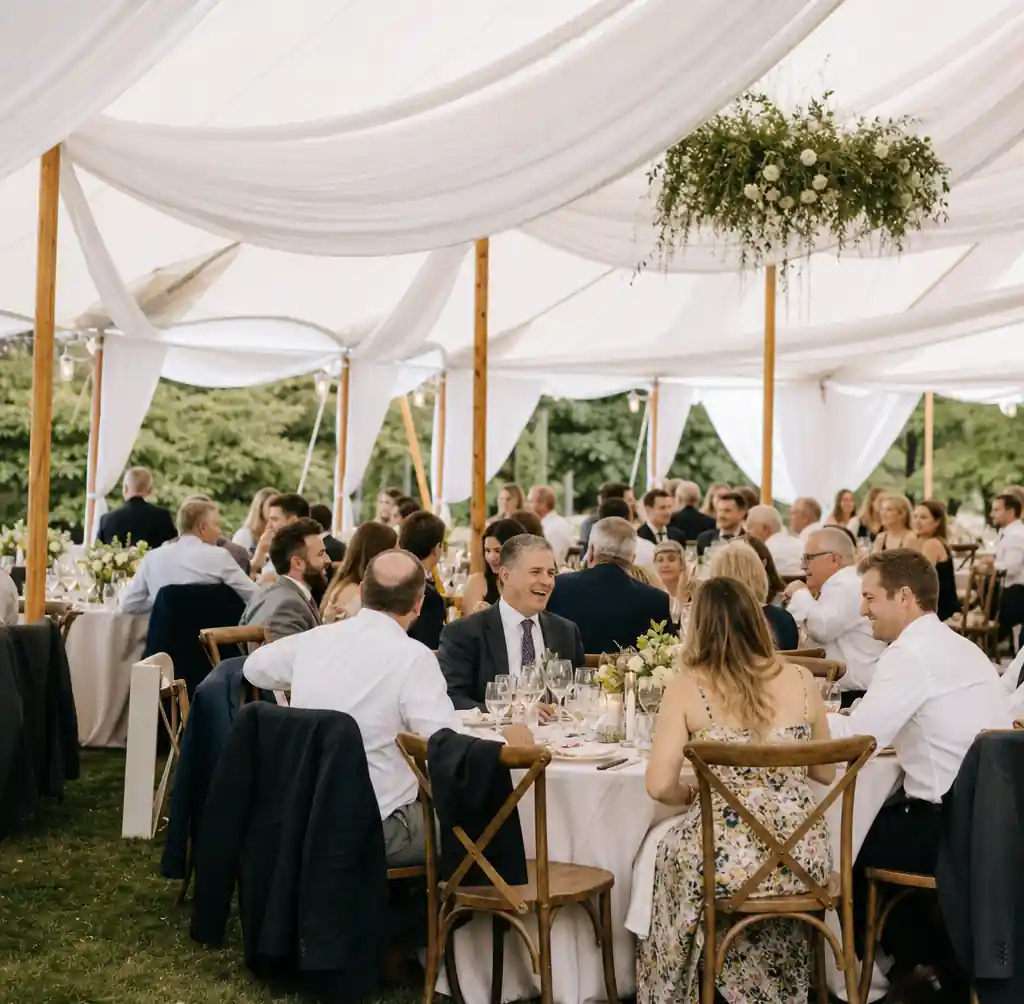 Successful outdoor event under insured tent structure with happy guests