


Aluminum vs Steel Tent Frames: Engineering Comparison Guide
Frame material selection impacts every aspect of tent performance from transportation logistics to structural lifespan. Aluminum and steel dominate the event tent market, with aluminum commanding 65% market share due to superior strength-to-weight ratio and corrosion resistance, while steel offers lower initial cost for permanent installations.
This engineering comparison analyzes aluminum versus steel tent frames across strength-to-weight ratio, corrosion resistance, span capabilities, cost, transport logistics, and lifespan. Understanding these technical differences helps you select the optimal frame material for your specific event requirements and environmental conditions.
Table of Contents
- 1. Frame Material Overview: Aluminum vs Steel
- 2. Strength-to-Weight Ratio Comparison
- 3. Corrosion Resistance and Climate Suitability
- 4. Span Capabilities and Structural Performance
- 5. Cost Analysis: Initial Investment vs Long-Term Value
- 6. Transport Weight and Logistics
- 7. Lifespan and Maintenance Requirements
- 8. Application-Specific Recommendations
- 9. FAQ
- 10. 10. Conclusion
Frame Material Overview: Aluminum vs Steel
Aluminum tent frames use 6061-T6 aluminum alloy, a heat-treated material providing high strength-to-weight ratio and natural corrosion resistance. Aluminum frames use 2mm wall thickness to compensate for lower absolute strength compared to steel.
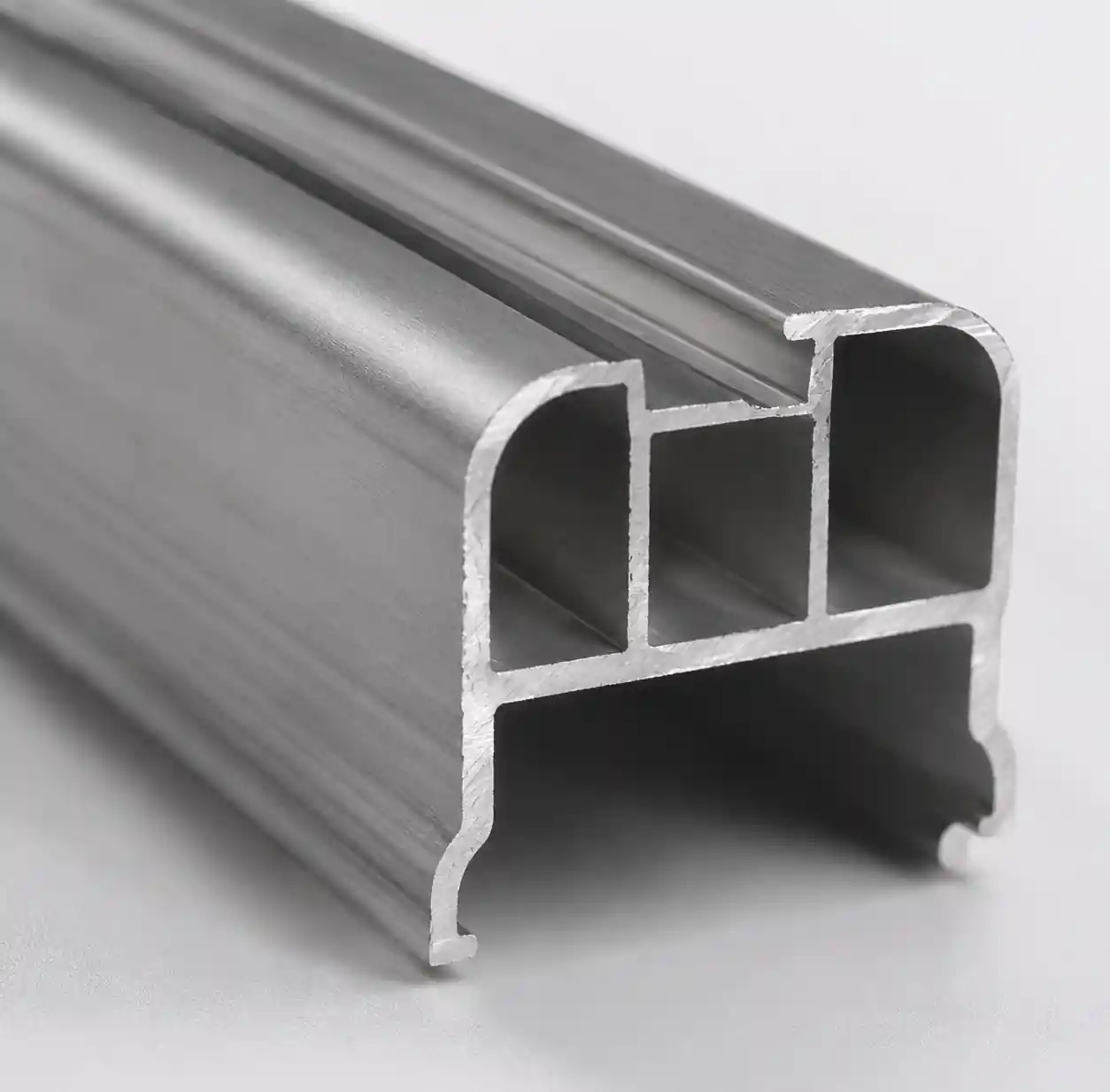 Aluminum 6061-T6 tent frame profile cross-section
Steel tent frames use Q235 carbon steel, offering superior absolute tensile strength with 1mm wall thickness. Steel requires protective coatings such as powder coating or galvanization to prevent rust in outdoor environments.
You can find aluminum frames in 65% of portable event tent structures due to their balance of weight and weather resistance. Steel remains preferred for permanent installations where maximum structural strength outweighs portability concerns.
Strength-to-Weight Ratio Comparison
Aluminum frames weigh one-third of steel equivalents. A 10x10m aluminum frame weighs 25-35 kg versus 40-50 kg for steel. For 20x30m event structures, you save 200-300 kg with aluminum frames.
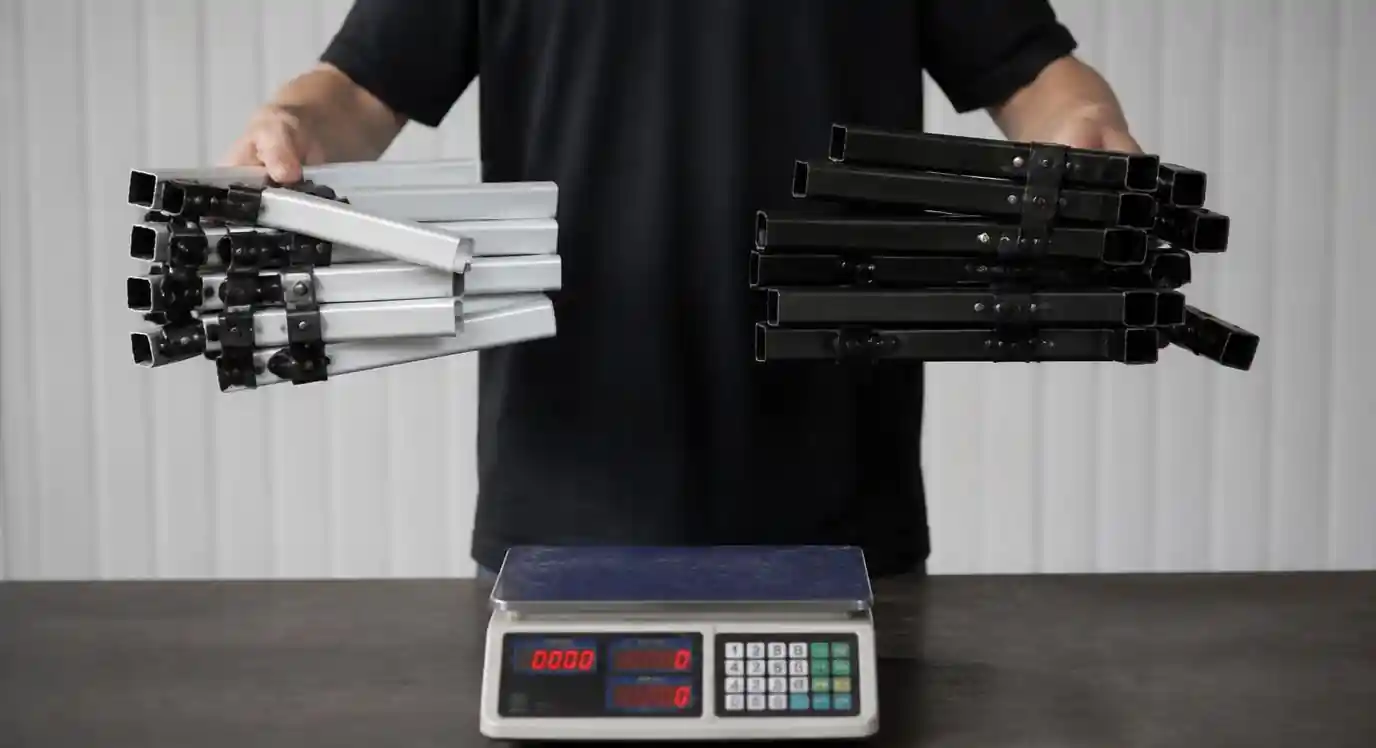 Aluminum and steel tent frame weight comparison
Aluminum 6061-T6 delivers 310 MPa tensile strength at 2.7 g/cm³ density. Steel provides 400-550 MPa at 7.85 g/cm³. When you calculate strength per unit weight, aluminum provides 115 kN·m/kg versus 51-70 kN·m/kg for steel.
| Performance Metric | Aluminum 6061-T6 | Q235 Carbon Steel |
|---|---|---|
| Density | 2.7 g/cm³ | 7.85 g/cm³ |
| Tensile Strength | 310 MPa | 400-550 MPa |
| Yield Strength | 276 MPa | 235 MPa |
| Strength-to-Weight Ratio | 115 kN·m/kg | 51-70 kN·m/kg |
| 10x10m Frame Weight | 25-35 kg | 40-50 kg |
Both materials achieve equivalent wind load performance when properly engineered. Aluminum compensates for lower absolute strength through increased wall thickness and optimized profile geometry.
Corrosion Resistance and Climate Suitability
Aluminum forms a natural aluminum oxide layer (Al₂O₃) that creates self-healing protection against corrosion. This passive oxidation prevents further degradation without external coatings. You can use aluminum frames in coastal environments, tropical climates, and high-humidity regions without significant corrosion concerns.
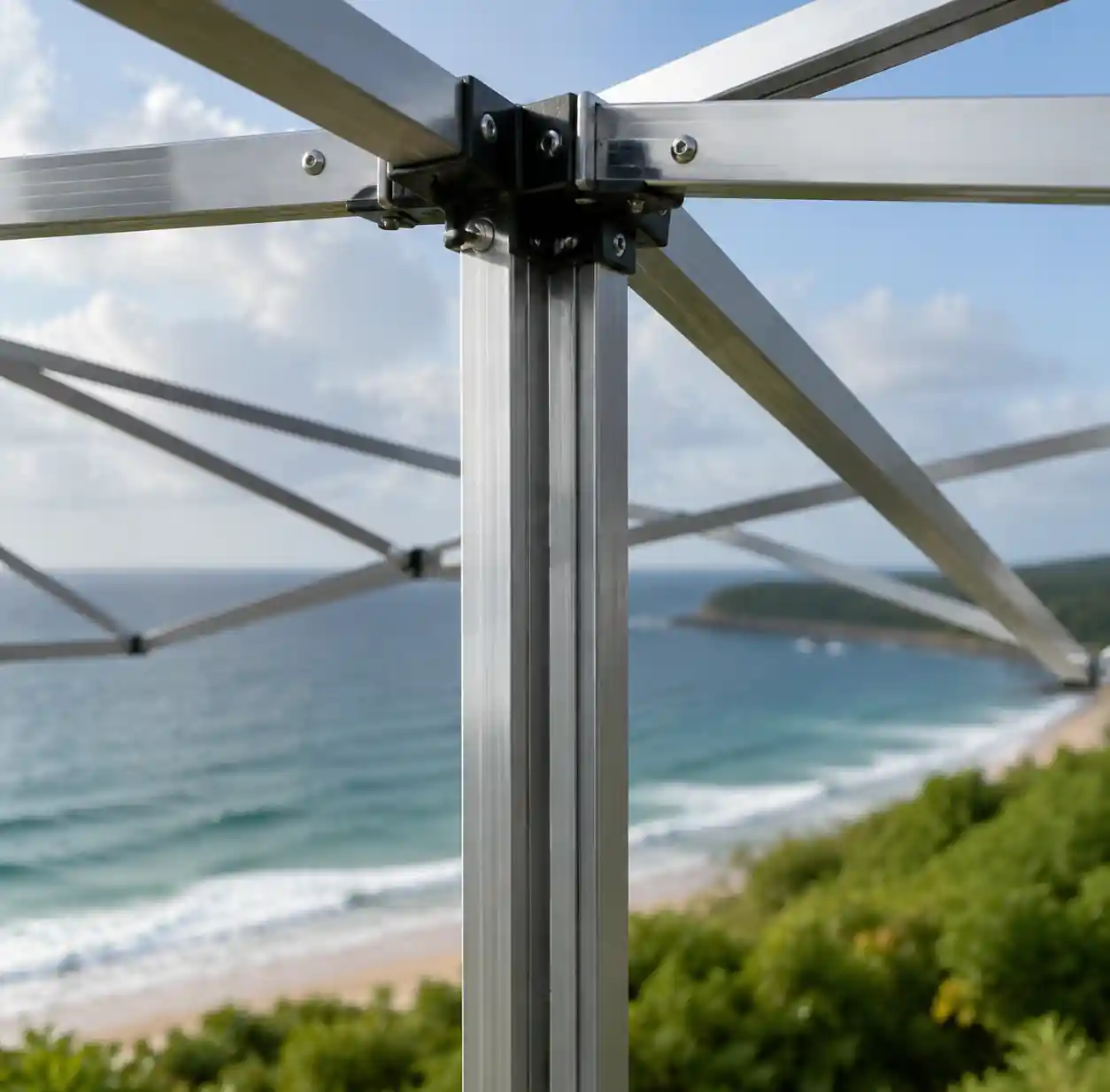 Aluminum tent frame in coastal environment showing corrosion resistance
Carbon steel oxidizes when exposed to moisture and oxygen, requiring protective coatings such as powder coating or galvanization. Coating damage from setup and teardown exposes bare steel to accelerated corrosion. Coastal salt spray significantly reduces steel frame lifespan.
Climate Performance:
- Coastal Regions: Aluminum maintains integrity for 18-22 years; steel requires frequent recoating
- Tropical/High Humidity: Aluminum performs well; steel develops rust within 2-3 years
- Arid/Desert: Both materials perform adequately
- Temperate: Both suitable; aluminum offers lower maintenance
Aluminum frames maintain structural integrity for 18-22 years in coastal environments with routine maintenance. Steel frames typically last 5-7 years under similar conditions before requiring replacement.
Span Capabilities and Structural Performance
Modern aluminum tent frames achieve clear spans up to 60 meters for large-scale structures. The 6061-T6 alloy provides sufficient rigidity for 20-30 meter spans without interior support poles. Aluminum's strength-to-weight ratio allows modular expansion for events accommodating 1000+ guests.
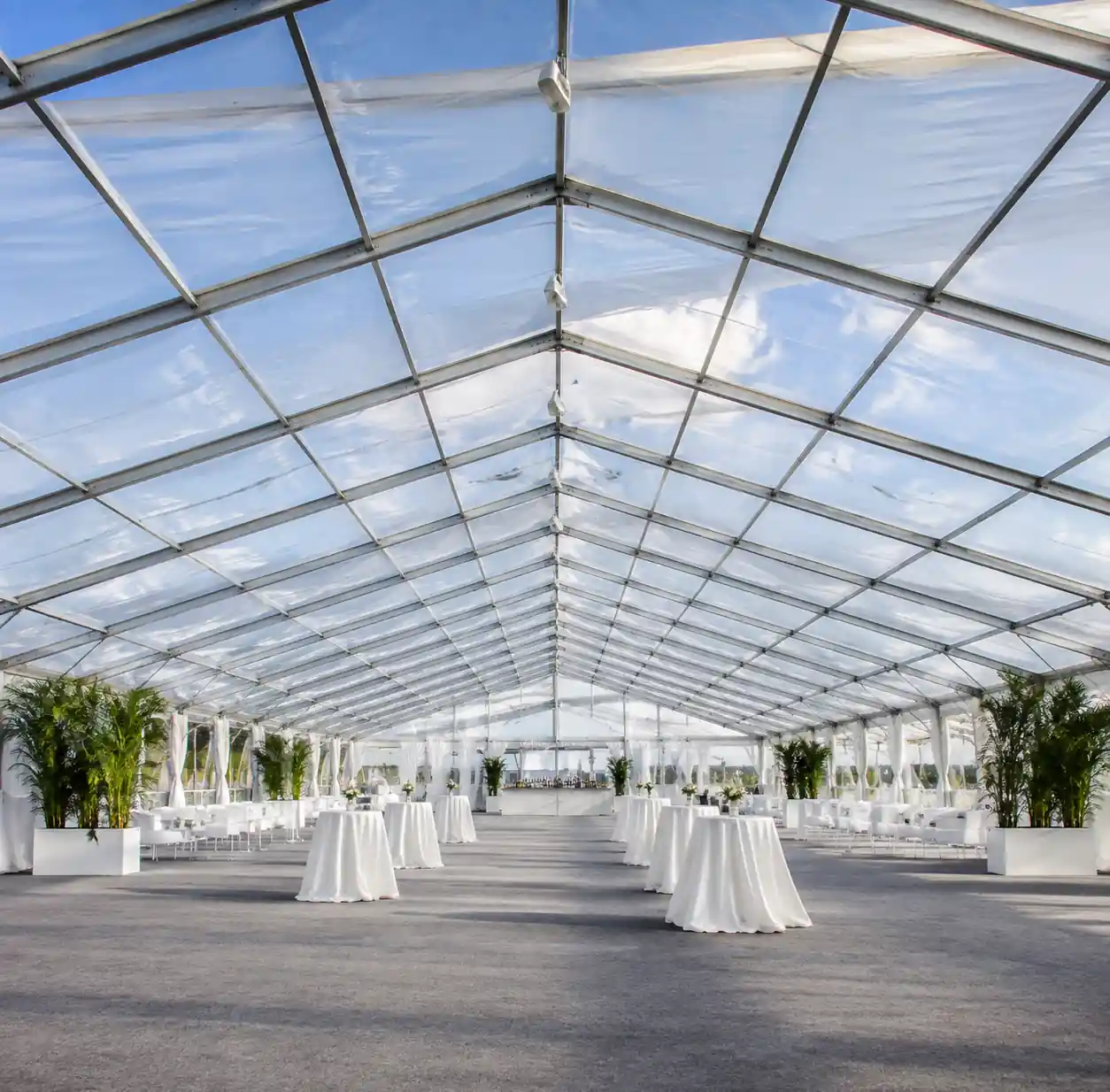 Large clear span aluminum tent structure at outdoor event
Steel frames achieve similar maximum spans due to higher absolute strength. However, weight becomes significant for spans exceeding 30 meters. Steel's superior rigidity makes it preferred for permanent installations.
| Span Range | Aluminum Frame | Steel Frame |
|---|---|---|
| Small (3-10m) | Excellent portability, easy setup | Heavier but lower cost |
| Medium (10-20m) | Optimal strength-to-weight balance | Good strength, transport challenges |
| Large (20-40m) | Industry standard for portable events | Suitable but heavy for frequent moves |
| Extra Large (40-60m) | Achievable with engineering | Weight becomes prohibitive |
Both materials meet equivalent wind load ratings (80-120 km/h). Heavier steel frames provide natural uplift resistance, while aluminum requires proper ballasting or ground anchoring.
Cost Analysis: Initial Investment vs Long-Term Value
Steel frames cost 30-40% less than aluminum at initial purchase. A 10x20m steel frame costs $3,000-4,500 versus $4,500-6,500 for aluminum. This initial cost advantage makes steel attractive for permanent installations.
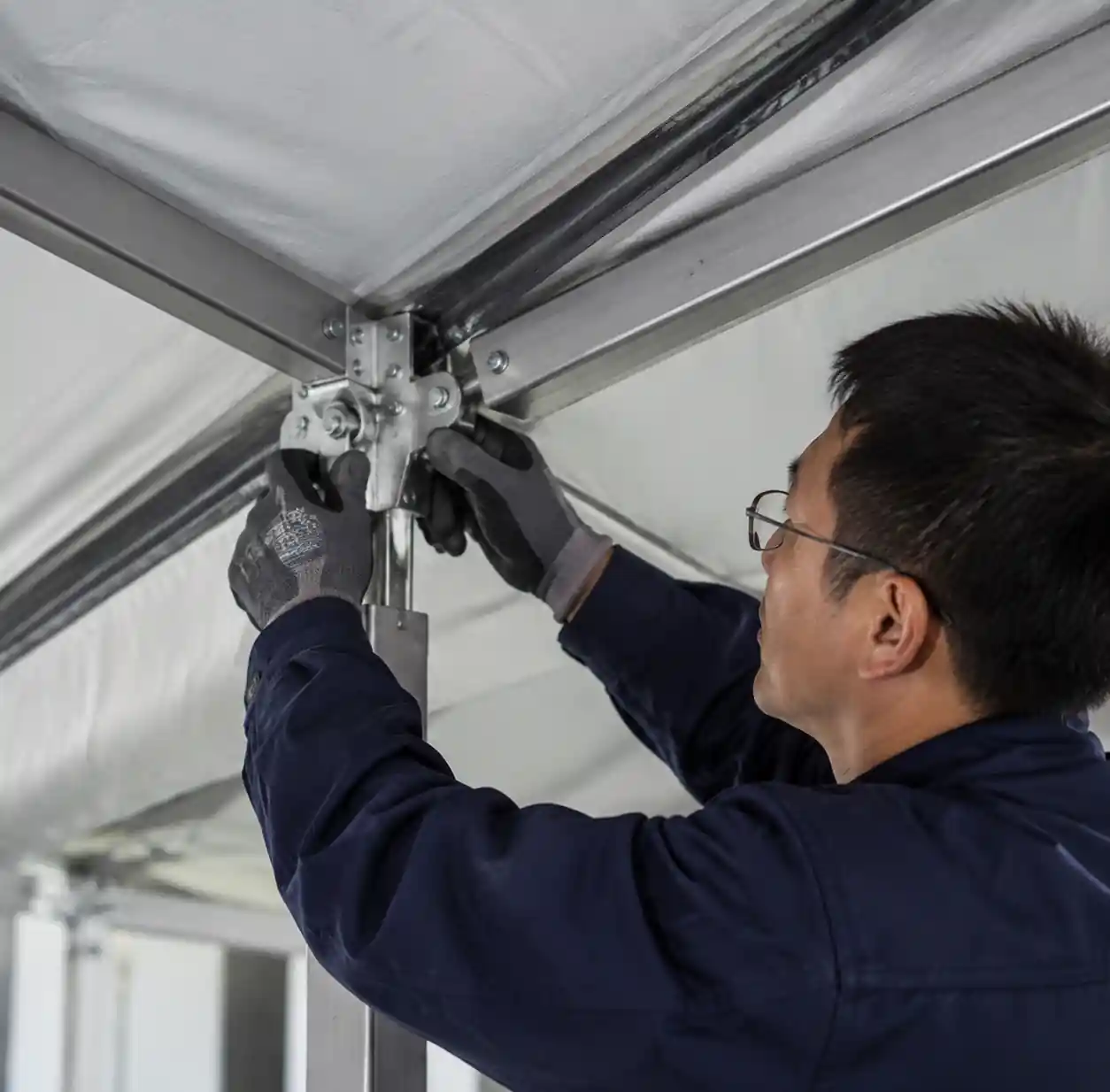 Tent frame maintenance and connection point inspection
Aluminum requires minimal maintenance beyond cleaning and connection inspection. Steel requires regular coating inspection, rust treatment, and recoating every 3-5 years. Annual maintenance for steel adds $200-500 per structure depending on size and climate.
| Cost Factor | Aluminum Frame | Steel Frame |
|---|---|---|
| Initial Purchase | $5,500 | $3,800 |
| Annual Maintenance | $100 | $400 |
| 10-Year Maintenance | $1,000 | $4,000 |
| Replacement Need | No (15-20 year lifespan) | Possible (7-10 year lifespan) |
| Total 10-Year Cost | $6,500 | $7,800-11,800 |
For tent rental businesses and frequent event use, aluminum provides better long-term value despite higher upfront cost. For one-time installations, steel's lower initial cost offers better return.
Transport Weight and Logistics
Aluminum's 60-70% weight reduction significantly impacts logistics. A cargo van transports three 10x10m aluminum tents versus two steel tents. For large events requiring multiple structures, this weight difference scales to entire vehicle loads.
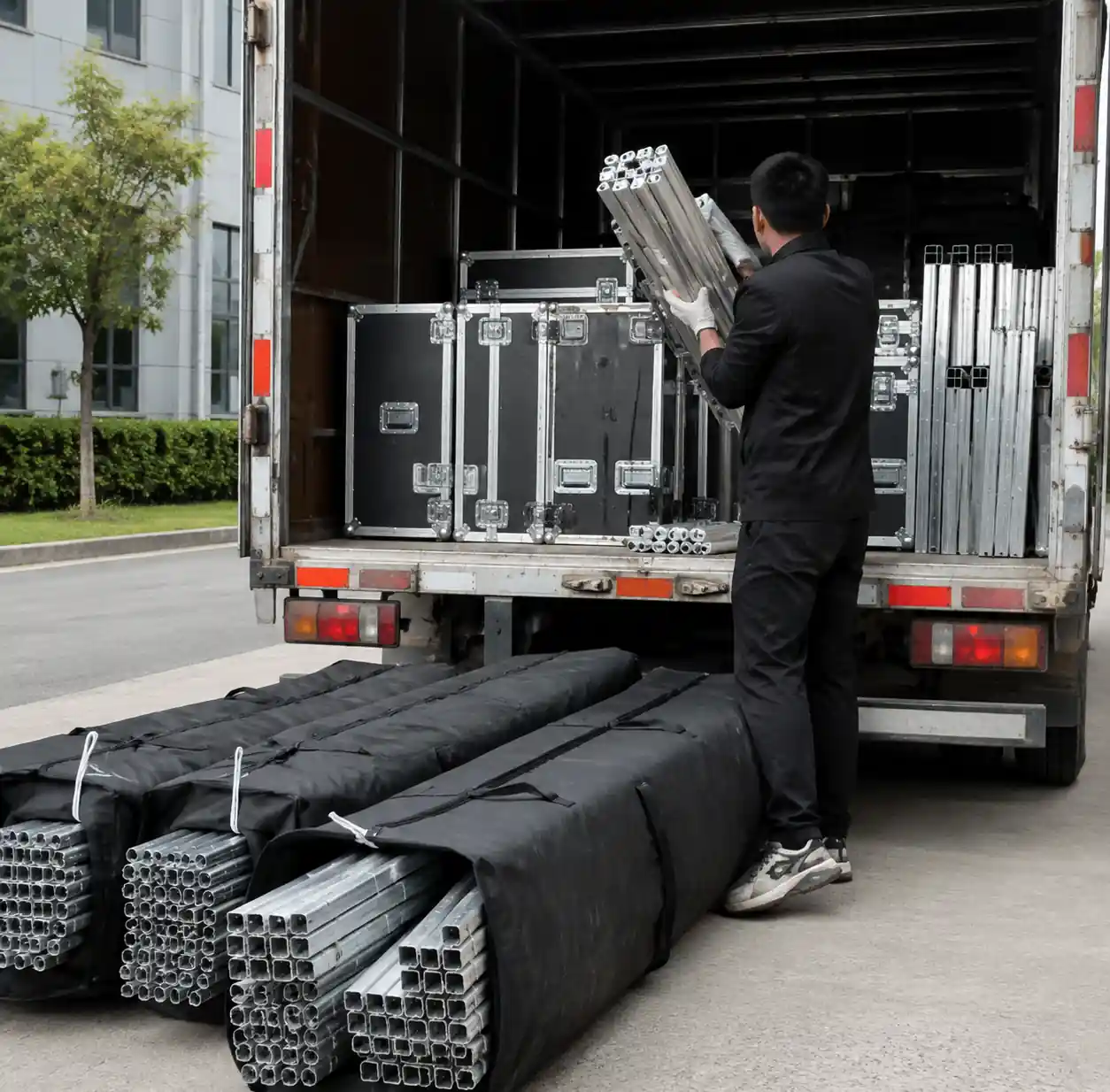 Aluminum tent frames being loaded for transportation
Lighter aluminum frames require fewer personnel for setup. A two-person crew handles aluminum installation for structures up to 15 meters span. Steel frames of equivalent size typically require three or more personnel.
International shipping costs for aluminum run 30-40% lower than steel due to weight-based pricing. For companies importing tents or deploying across multiple locations, this transportation cost advantage accumulates significantly.
Lifespan and Maintenance Requirements
With routine maintenance (annual inspection, connection lubrication, cleaning), 6061-T6 aluminum frames maintain structural integrity for 18-22 years. In rental environments with frequent setup and teardown cycles, aluminum frames last 8-10 years.
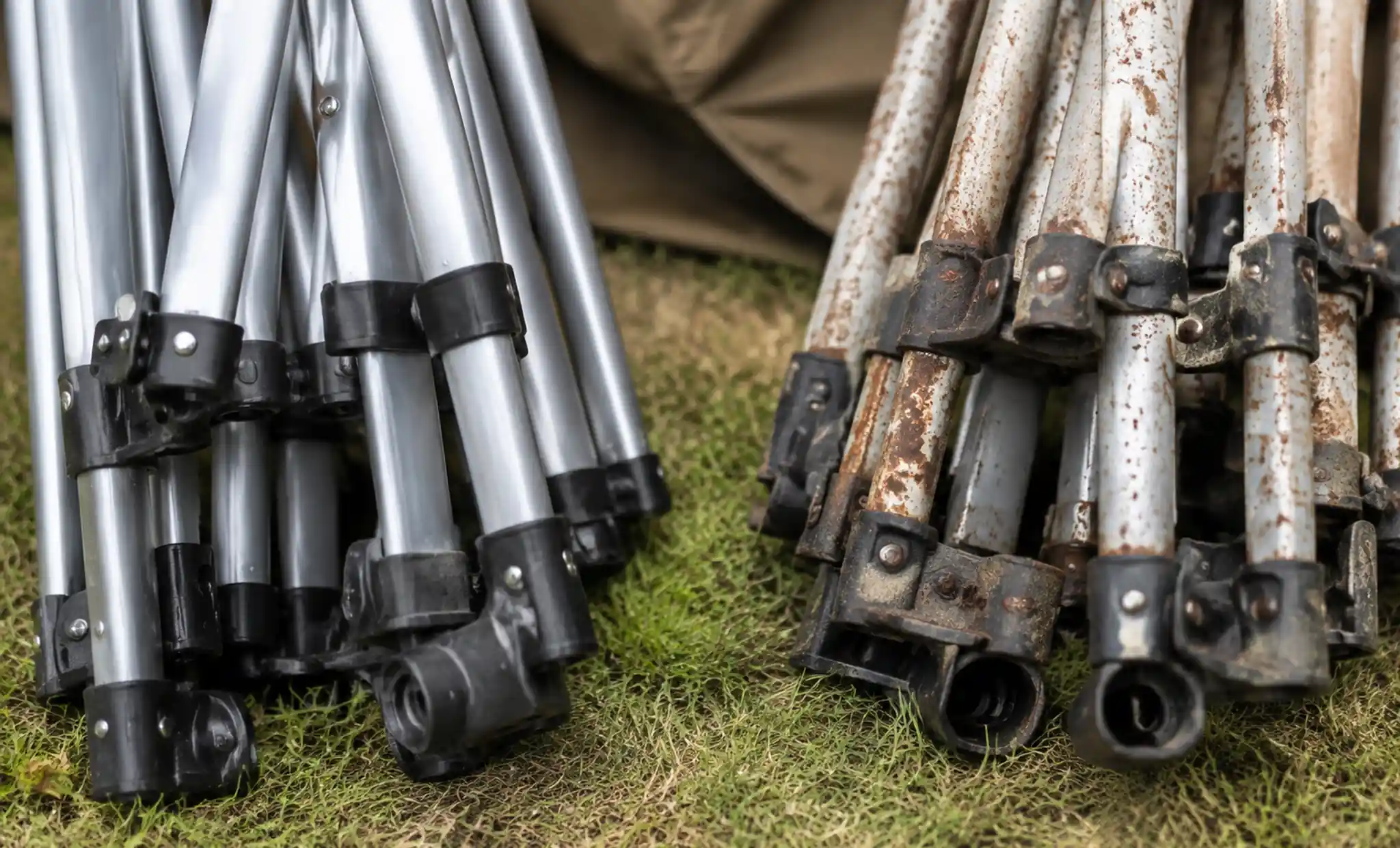 Long-term tent frame condition comparison in field use
Steel frames with intact coatings last 10-15 years for permanent installations. In rental applications with frequent handling and coating wear, steel requires replacement after 5-7 years. Coastal and high-humidity environments accelerate deterioration to 3-5 years.
Maintenance Requirements:
- Aluminum: Annual connection inspection, cleaning with mild detergent, joint lubrication
- Steel: Quarterly coating inspection, immediate rust treatment, recoating every 3-5 years
Aluminum frames typically fail through connection wear or accidental damage rather than corrosion. Steel frames fail through coating breakdown leading to structural rust at connection points and high-stress areas.
Application-Specific Recommendations
Choose Aluminum Frames When:
- Frequent transportation between event locations is required
- Setup must be completed by small crews (2-3 people)
- Events occur in coastal regions or tropical climates
- Long-term value and low maintenance are priorities
- International shipping or multi-city deployments are planned
- Rental business model requires durability across multiple uses
Choose Steel Frames When:
- Budget constraints prioritize lowest initial cost
- Tent will be permanently installed in one location
- Operating in dry, arid climates with minimal corrosion risk
- Maximum absolute structural strength is required
- One-time event use where long-term durability is not essential
Industry Applications:
- Wedding Venues: Aluminum for portability and aesthetic appearance
- Exhibition Halls: Aluminum for frequent reconfiguration
- Industrial Storage: Steel for permanent installation cost savings
- Brand Roadshows: Aluminum for multi-city logistics efficiency
- Music Festivals: Aluminum for large clear-span structures
- Military/Emergency: Aluminum for rapid deployment requirements
FAQ
What is the weight difference between aluminum and steel tent frames?
Aluminum frames weigh approximately 30-35 kg for a 10x10m structure, while steel frames of the same size weigh 40-50 kg. Aluminum is roughly one-third the weight of steel for equivalent structural capacity.
Does aluminum provide sufficient strength for large event tents?
Yes. Aluminum 6061-T6 alloy provides sufficient structural strength for event tents up to 60 meters clear span. The material compensates for lower absolute strength compared to steel through increased wall thickness (2mm vs 1mm) and optimized profile geometry.
How long do aluminum tent frames last in coastal environments?
With routine maintenance, aluminum tent frames maintain structural integrity for 18-22 years in coastal environments. The natural aluminum oxide layer provides excellent corrosion resistance against salt spray and high humidity.
Are steel tent frames more affordable than aluminum?
Steel frames cost 30-40% less at initial purchase. However, when you factor in maintenance costs (coating repairs, rust treatment) and shorter lifespan (5-7 years vs 8-10 years for portable use), aluminum often provides better total cost of ownership over 10 years.
Which frame material is better for tropical climates?
Aluminum is superior for tropical climates due to natural corrosion resistance. Steel frames in high-humidity tropical environments develop rust within 2-3 years without aggressive protective maintenance and recoating.
Can steel tent frames achieve the same wind load ratings as aluminum?
Yes. Both materials can be engineered to meet equivalent wind load ratings (typically 80-120 km/h for event structures). The difference lies in design approach – steel uses higher absolute strength, while aluminum uses optimized geometry and proper anchoring systems.
10. Conclusion
Aluminum tent frames provide superior strength-to-weight ratio, natural corrosion resistance, lower transportation costs, and 8-10 year lifespan in rental applications. Steel offers 30-40% lower initial cost and higher absolute strength for permanent installations. For portable event tents requiring frequent transportation and setup, aluminum delivers better long-term value despite higher upfront cost.
If you need high-quality event tent solutions with aluminum or steel frames for your project, Velaria Spatia offers manufacturing capabilities for structures spanning 3 to 60 meters. Our facility features advanced aluminum extrusion technology and precision welding systems, ensuring superior quality for wedding marquees, exhibition structures, sports venues, and large-scale festival infrastructure.
Contact us today for custom tent frame solutions, detailed engineering specifications, and competitive factory-direct pricing.