


Understanding Tent Wind Load Ratings: Safety Standards Explained
Wind load ratings determine whether your tent stays standing or becomes a hazard during adverse weather. With over 60% of event tent failures attributed to inadequate wind resistance, understanding these specifications is essential for attendee safety and liability protection.
Wind load ratings measure a tent's engineered capacity to withstand wind forces expressed in km/h. These ratings account for structural design, anchoring systems, and safety margins verified by licensed engineers. This guide covers the Beaufort wind scale, km/h classifications, certification standards, anchoring systems, regional requirements, and safety margins so you can protect both people and property.
Table of Contents
- 1. What Are Tent Wind Load Ratings?
- 2. The Beaufort Wind Scale for Tent Operations
- 3. Wind Speed Classifications: km/h Ratings Explained
- 4. Engineering Certification and Testing Standards
- 5. Anchoring Systems and Load Distribution
- 6. Regional Safety Requirements and Regulations
- 7. Safety Margins: Design Load vs Operational Limits
- 8. How to Calculate Required Wind Ratings for Your Site
- 9. FAQ
- 10. Conclusion
What Are Tent Wind Load Ratings?
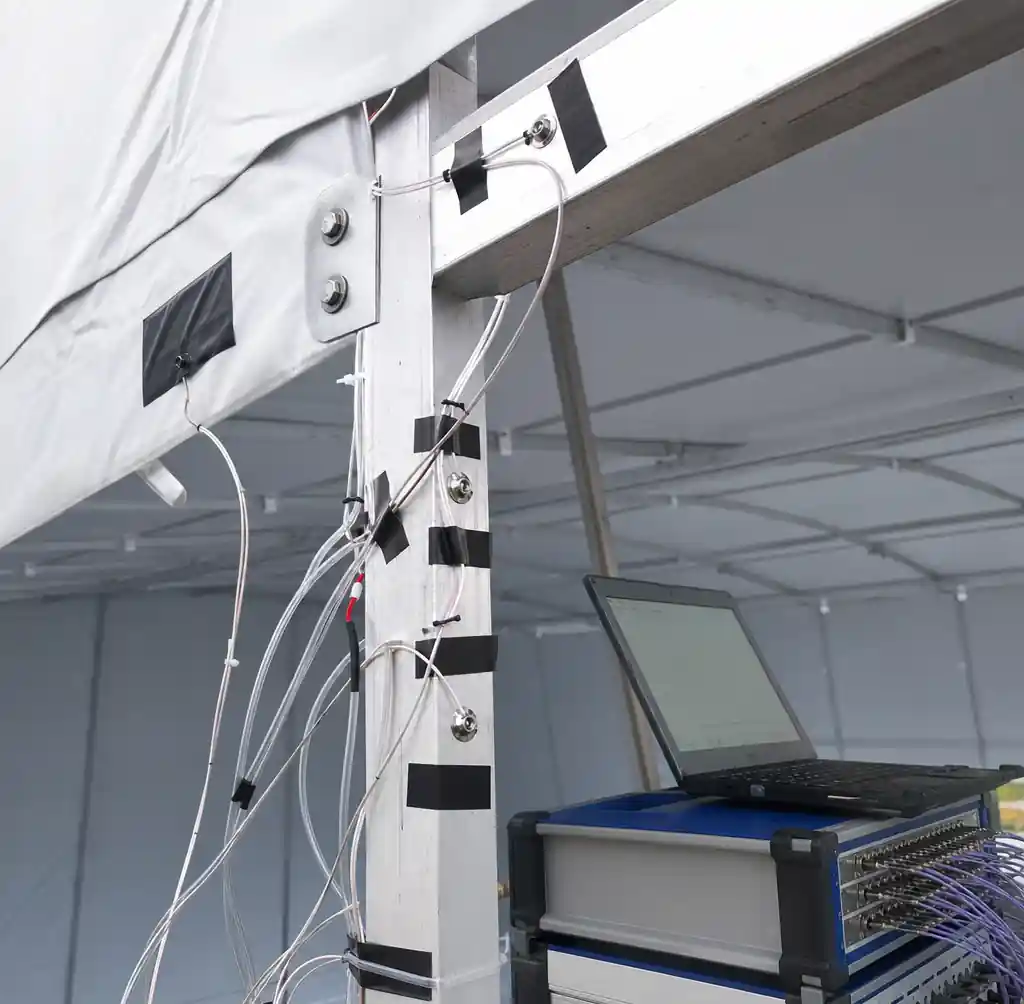 Wind load testing setup on industrial tent structure with pressure sensors
Wind load ratings represent the maximum sustained wind speed a tent structure can withstand while maintaining structural integrity. These ratings result from engineering calculations analyzing how wind forces interact with tent geometry, materials, and anchoring systems.
A rating of 100 km/h means the tent structure has been engineered to safely resist sustained winds of 100 km/h when properly installed. However, operational limits typically sit 20-30% below design ratings to account for gusts, installation variability, and material aging.
Wind creates three primary forces: horizontal pressure against vertical surfaces, uplift forces on roofs creating vacuum effects, and overturning moments attempting to topple the structure. Engineers calculate these using standards like ASCE 7 or EN 1991-1-4.
You need certified ratings because insurance providers, venues, and authorities require documented structural capacity. Without certification, you risk event cancellation and liability exposure.
The Beaufort Wind Scale for Tent Operations
The Beaufort scale provides practical classifications correlating with observable effects for real-time safety decisions.
| Beaufort Scale | Wind Speed (km/h) | Wind Speed (mph) | Observable Effects | Tent Operation Status |
|---|---|---|---|---|
| 0-3 | 0-19 | 0-12 | Light breeze, leaves rustle | Safe for all tent operations |
| 4 | 20-28 | 13-18 | Small branches move, dust raised | Safe with monitoring |
| 5 | 29-38 | 19-24 | Small trees sway, wavelets on water | Caution: Secure loose items |
| 6 | 39-49 | 25-31 | Large branches move, umbrellas difficult | High alert: Monitor conditions |
| 7 | 50-61 | 32-38 | Whole trees in motion, walking impeded | Evacuate standard tents immediately |
| 8+ | 62+ | 39+ | Twigs break, vehicles affected | All tents must evacuate |
Professional operators evacuate structures when sustained winds reach Beaufort 7 (50-61 km/h), regardless of design rating. Industry protocols recommend continuous weather monitoring with predetermined triggers.
Gust speeds exceeding 70 km/h warrant immediate evacuation even for tents rated to 100 km/h sustained winds. You can estimate wind speed by observing: if large branches move vigorously or you feel walking resistance, winds likely exceed safe limits.
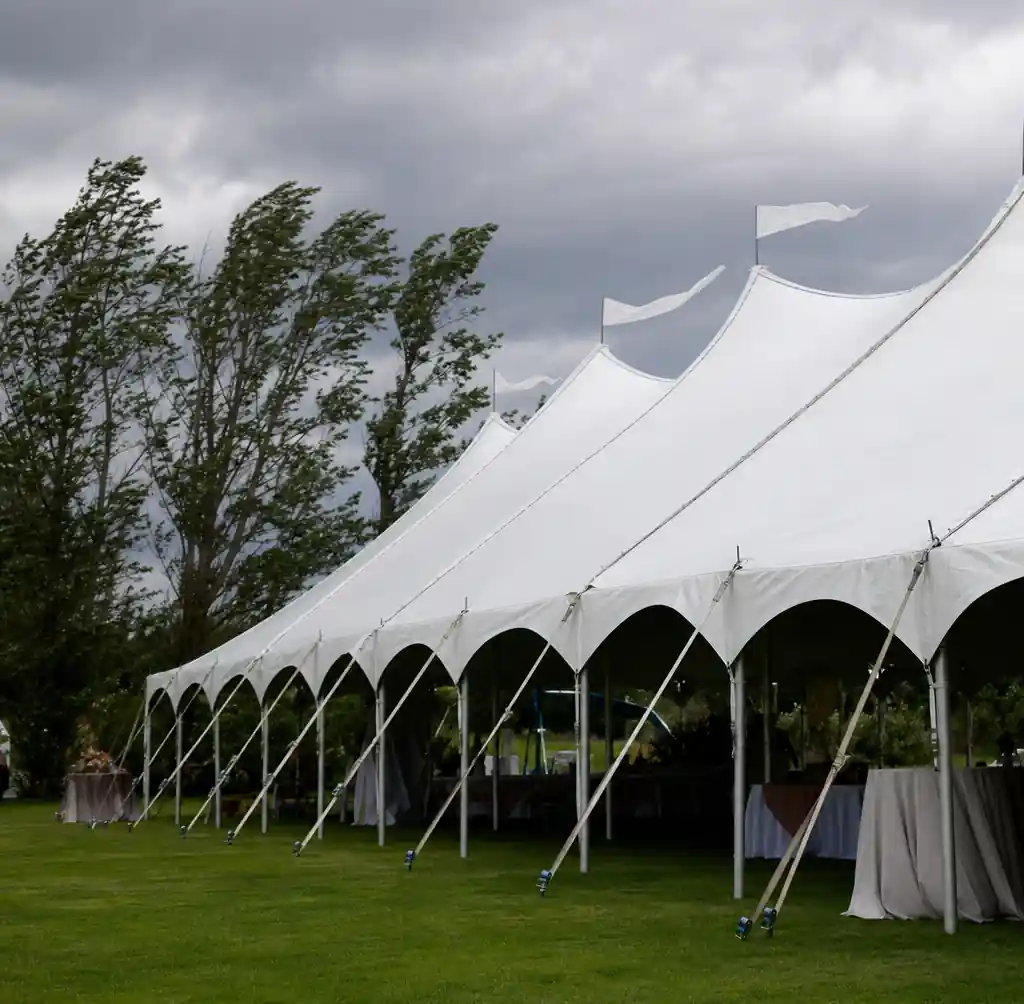 Event tent experiencing moderate wind conditions with observable effects
Wind Speed Classifications: km/h Ratings Explained
Industrial storage tents and event structures typically carry wind ratings between 80-120 km/h, matching regional requirements.
Standard Event Tents (80-90 km/h): Designed for temporary installations in moderate wind zones. Suitable for weddings, garden parties, and short-duration events. Require evacuation when winds exceed 50-60 km/h.
Commercial Grade (90-100 km/h): Engineered for exhibition halls, trade shows, and multi-day events. Enhanced frame rigidity provides additional safety margins.
Heavy-Duty Structures (100-120 km/h): Built for sports events, festivals, and semi-permanent installations with larger frame profiles.
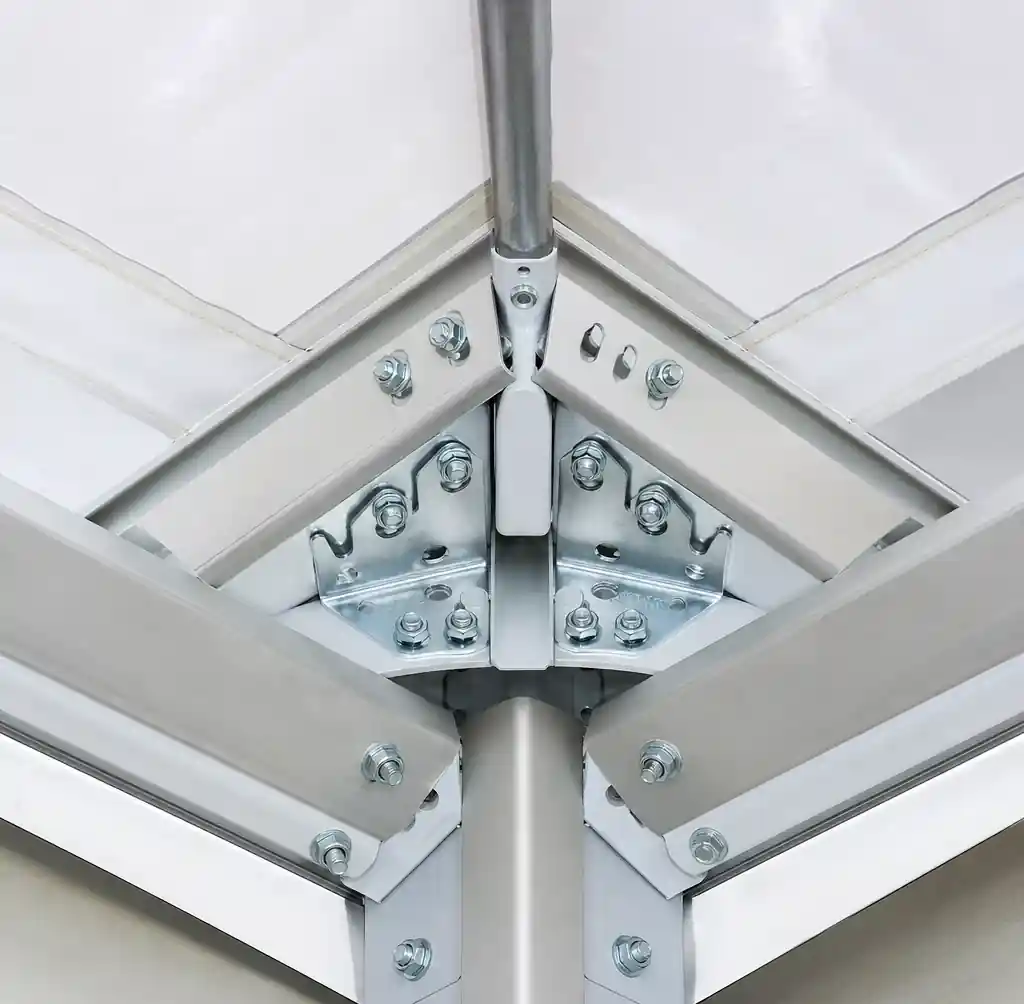 Heavy-duty tent frame showing reinforced connection points and structural members
Industrial Grade (120+ km/h): Engineered for long-term warehouse storage with steel reinforcement and concrete foundations.
Wind ratings measure sustained speeds, not gusts. A tent rated for 100 km/h sustained may only withstand 70-80 km/h gusts due to dynamic amplification. Engineering standards apply gust factors of 1.3-1.5×.
| Tent Classification | Sustained Wind Rating | Maximum Safe Gust | Typical Applications | Anchoring Density |
|---|---|---|---|---|
| Light Duty | 60-80 km/h | 45-55 km/h | Residential parties, short events | 1 anchor per 15-20 m² |
| Standard Event | 80-90 km/h | 55-65 km/h | Weddings, corporate events | 1 anchor per 10-15 m² |
| Commercial | 90-100 km/h | 65-75 km/h | Exhibitions, festivals | 1 anchor per 8-12 m² |
| Heavy-Duty | 100-120 km/h | 75-90 km/h | Semi-permanent, sports venues | 1 anchor per 6-10 m² |
| Industrial | 120+ km/h | 90+ km/h | Warehouse, permanent installations | Engineered foundation |
Regional building codes mandate minimum ratings based on local wind zones. Coastal areas, mountain valleys, and open plains typically require higher ratings.
Engineering Certification and Testing Standards
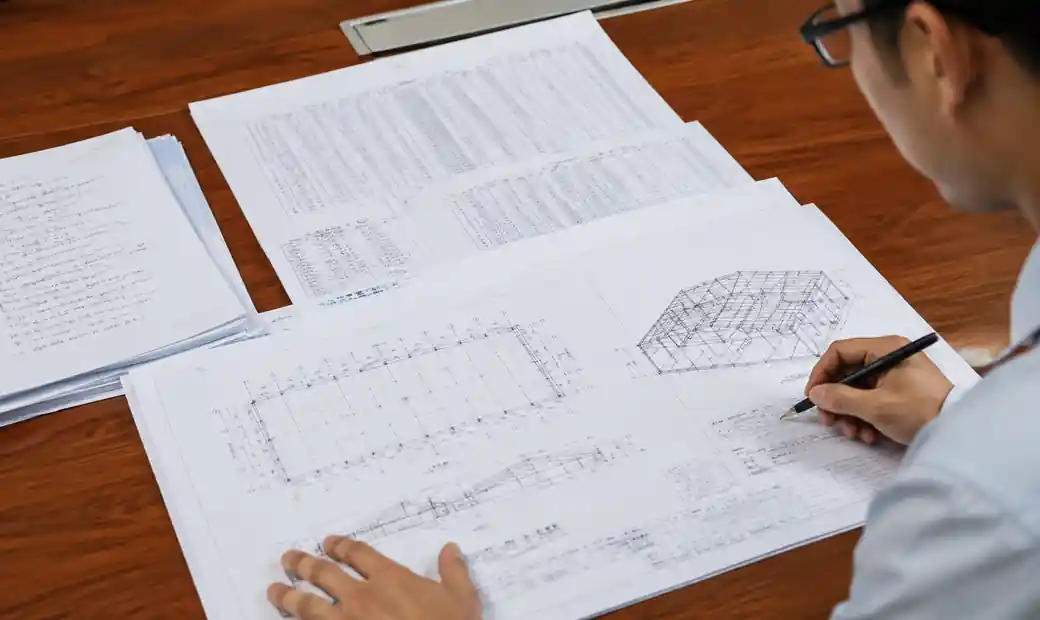 Professional engineer reviewing tent structural drawings and certification documents
Legitimate wind ratings require stamped drawings from licensed professional engineers who analyze structural performance. Without PE certification, wind ratings are unverified claims.
ASCE 7 Standard (North America): Defines wind load calculations based on regional zones, terrain exposure, and structure geometry. Engineers produce design pressures in Pascals or psf.
EN 13782 & EN 1991-1-4 (Europe): European structures follow EN 13782 safety requirements with EN 1991-1-4 wind calculations. Standards mandate structural analysis for temporary structures exceeding 50 m².
Testing: Full-scale wind tunnel testing validates computational models for novel geometries. Most standard designs rely on proven computational methods.
Certified packages include stamped structural drawings, anchoring load calculations, material specifications, and operational limits. Engineered tents cost 15-30% more but provide liability protection.
Anchoring Systems and Load Distribution
Wind forces transfer from fabric to frame to anchoring systems that resist uplift, overturning, and sliding. Anchoring failure causes most wind-related collapses despite adequate frame strength.
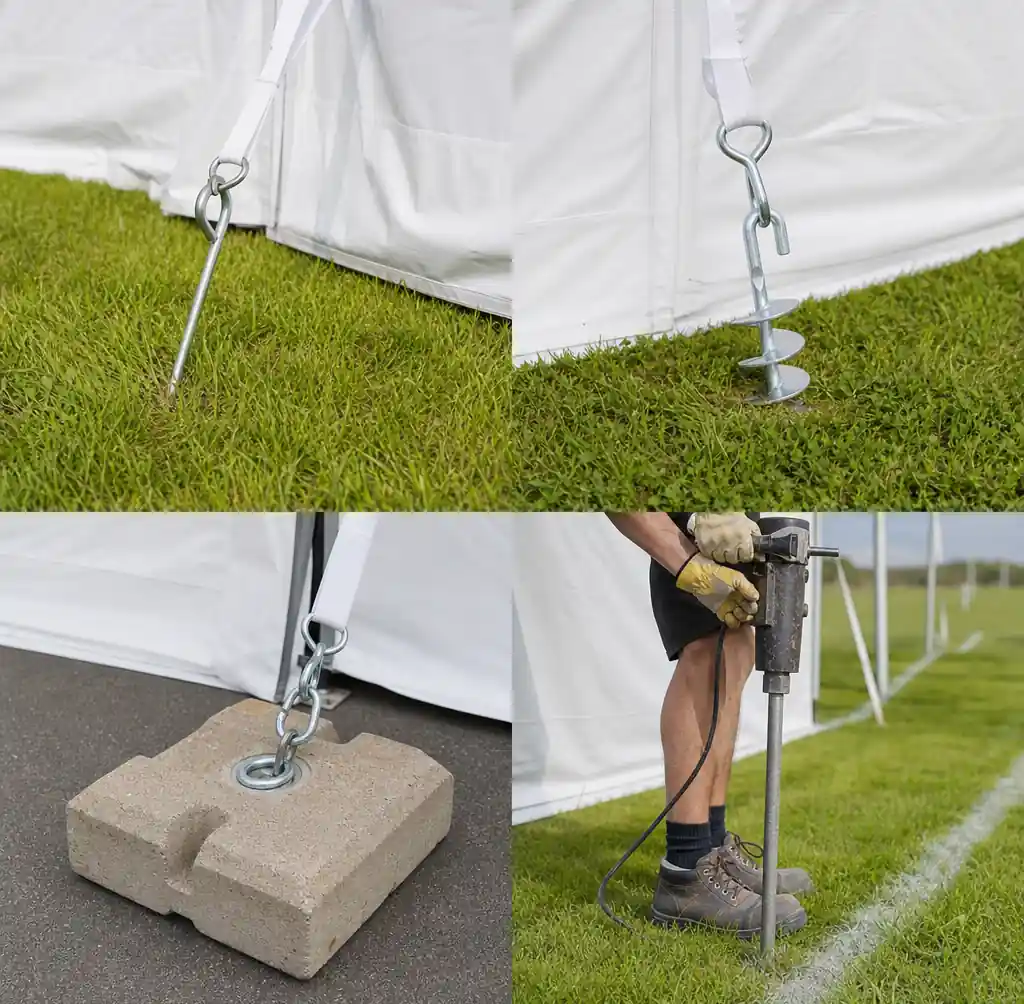 Various tent anchoring systems including ground stakes and concrete ballast
Ground Stakes: Driven steel stakes (600-900mm length) develop 1000-2000 kg capacity in soil. Sandy or saturated soils reduce capacity by 40-60%.
Concrete Ballast: Used on hard surfaces. Standard blocks weigh 20-40 kg each, with larger tents requiring 200-500 kg per leg position.
Auger Anchors: Helical screws (750-1500mm depth) deliver 3000-5000 kg capacity in soft soils. Require mechanical installation but provide verified capacity.
Concrete Footings: Permanent installations use poured foundations (500mm depth minimum) providing 10,000+ kg per anchor.
According to ASTM F2374 standards, each anchor must resist minimum 1600 N (360 lbf). Clear-span structures concentrate all loads at perimeter legs, requiring higher anchor capacity than pole-supported designs.
Regional Safety Requirements and Regulations
Wind requirements vary by region, reflecting local climate patterns and historical wind data.
North America: ASCE 7 wind maps divide regions into zones. Coastal areas require 225-260 km/h design, inland regions 145-177 km/h. Temporary structures design to 50% of permanent requirements with PE certification.
Europe: EN 1991-1-4 establishes zones with velocities from 79 km/h (Central Europe) to 108 km/h (coastal areas). Exhibition tents exceeding 50 m² must comply with EN 13782.
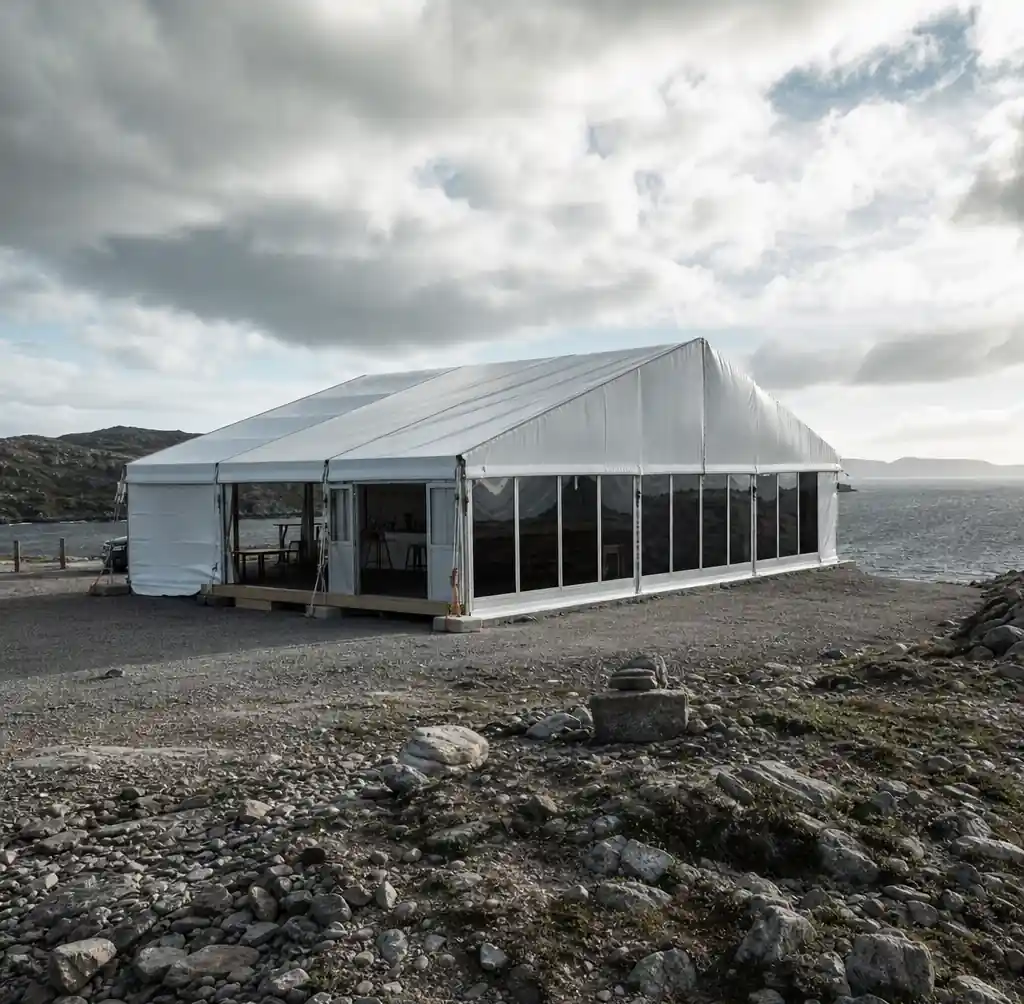 Tent structure installed in coastal high-wind region showing environmental context
Southeast Asia: Typhoon regions require 120-150 km/h for semi-permanent installations.
Australia: AS/NZS 1170.2 defines classifications W28-W44 (100-158 km/h) based on cyclone zones.
Middle East: Desert regions require 120-140 km/h for event tents with enhanced anchoring for sandy soil.
Permits mandate engineered drawings, PE certification, anchoring inspection, and weather monitoring. Costs range $200-2000.
Safety Margins: Design Load vs Operational Limits
Design ratings represent ultimate capacity under ideal conditions, while operational limits account for real-world variables.
Design Rating: Maximum wind speed at which failure is calculated, incorporating material safety factors (1.5-2.0×). A 100 km/h design rating means theoretical capacity exceeds this.
Operational Limit: Wind threshold triggering evacuation, typically 60-75% of design rating. Industry practices recommend evacuation at 55-65 km/h for tents rated 90-100 km/h.
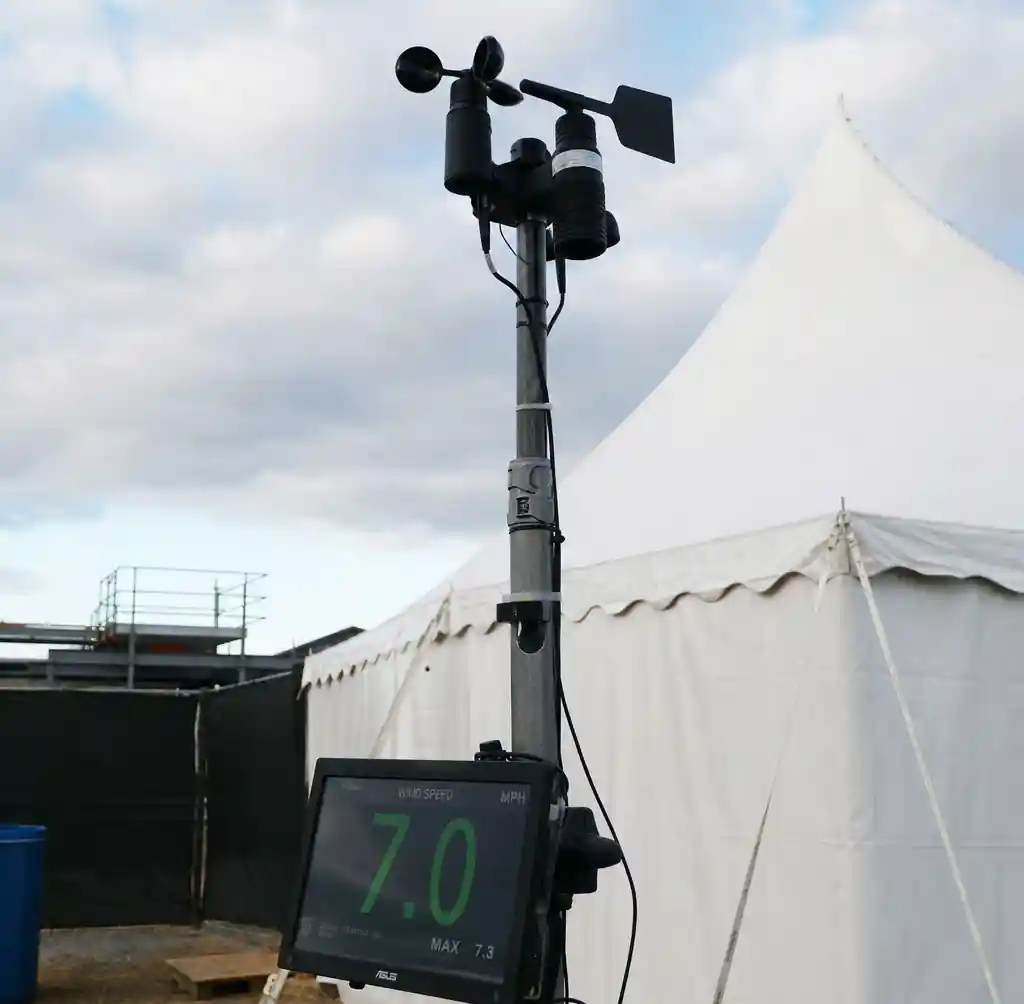 Weather monitoring station and anemometer at event tent site
Safety Factors: Engineering incorporates material strength (1.5-2.0×), load combinations (1.2-1.6×), and importance factors (1.0-1.15×)—creating total factors of 2.5-4.0×.
Age Degradation: UV exposure and repeated setup reduce capacity. Operators reduce limits by 10-15% after 5-7 years or retire structures after 10-15 years.
Installation Quality: Proper stake angle, insertion depth, fabric tension affect capacity. Poor installation reduces effectiveness by 30-50%.
Establish evacuation triggers: sustained wind (55-65 km/h), gusts (70-80 km/h), forecast warnings (severe weather within 6 hours), structural observations (movement, anchor shifting, fabric tearing).
How to Calculate Required Wind Ratings for Your Site
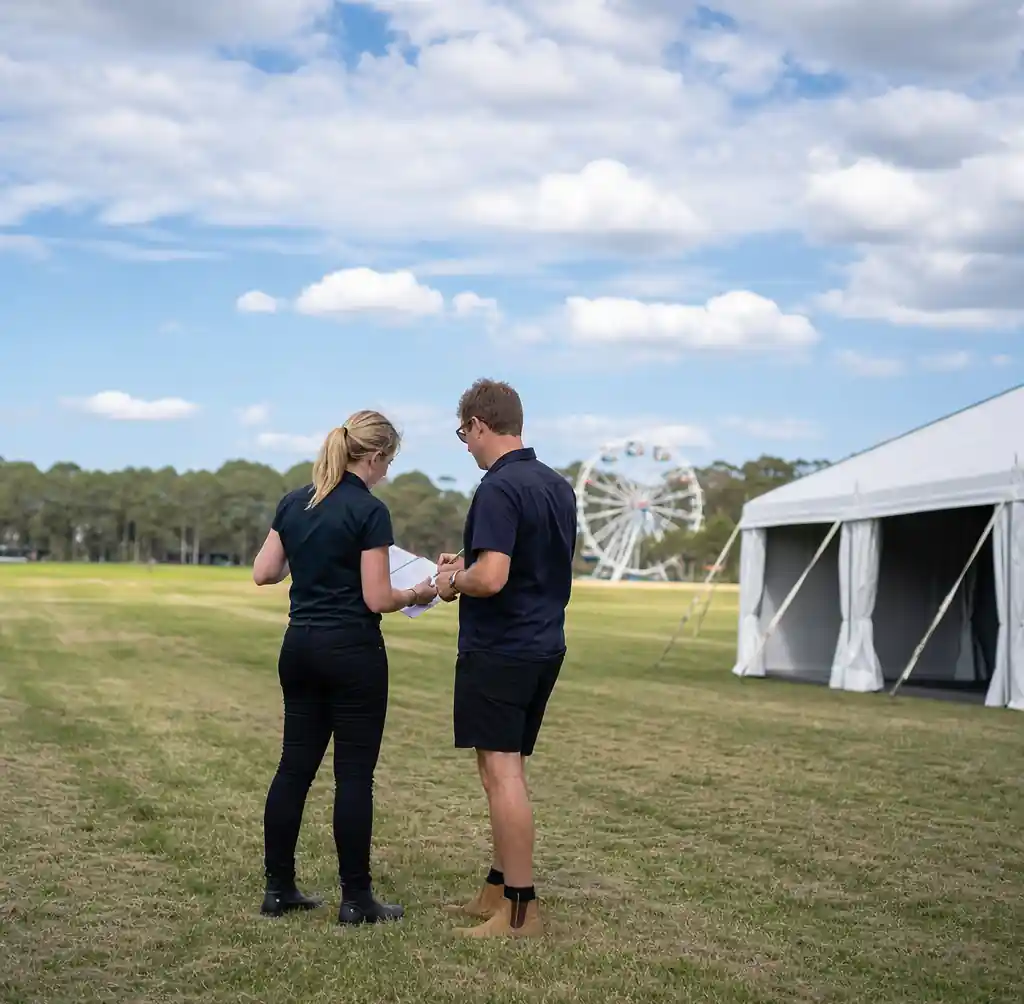 Event planner conducting site evaluation for tent installation wind exposure
Selecting appropriate ratings requires systematic site evaluation.
Step 1 - Local Wind Zone: Consult regional wind maps (ASCE 7, EN 1991-1-4) to identify your site's basic wind speed.
Step 2 - Terrain Exposure: Open fields require 20-30% higher ratings than suburban areas.
Step 3 - Topographic Effects: Hilltops accelerate winds by 10-40%. Engineers apply topographic factors for elevated sites.
Step 4 - Risk Profile: High-occupancy events warrant conservative ratings with extra margin.
Step 5 - Safety Margin: Select ratings 20-30% above calculated requirements.
Example: Wedding marquee in coastal location with 240 km/h permanent requirement. Temporary reduction (0.5×) yields 120 km/h. Exposure D increases to 140 km/h. Safety margin brings specification to 160 km/h design, 100 km/h operational limit.
Professional engineering costs $500-2000 but provides liability protection.
FAQ
Q: Can I use a tent rated for 80 km/h if the forecast shows 70 km/h gusts?
No. Gusts create dynamic amplification more severe than sustained winds. A tent rated for 80 km/h sustained should evacuate when gusts exceed 55-60 km/h. Postpone or relocate your event.
Q: Do tent wind ratings decrease as the tent ages?
Yes. UV degradation reduces capacity over time. Reduce operational limits by 10-15% after 5 years. Retire tents after 10-15 years or when showing deterioration.
Q: What's the difference between "tested to" and "rated for" wind speeds?
"Tested to" indicates survival at specific speed without guaranteeing safe operation. "Rated for" means licensed engineer certification for safe operation when properly installed. Only use PE-certified ratings for commercial events.
Q: How do I verify anchor capacity in different soils?
Professionals perform pull tests with load cells. Sandy soil provides 40% capacity of compact clay, saturated soil reduces capacity by 50-70%. When uncertain, double anchor density.
Q: Are concrete ballast weights as effective as ground stakes?
Ballast provides equivalent capacity with sufficient weight. A 1500 kg capacity stake needs approximately 1500 kg ballast. Verify total weight meets engineering requirements.
Conclusion
Wind load ratings transform complex structural engineering into operational specifications that protect lives. Understanding that 100 km/h ratings mean sustained wind capacity—not gust tolerance—and recognizing the difference between design limits and safe operational thresholds prevents most wind-related tent failures.
Key principles: verify PE certification before trusting wind rating claims, establish operational limits 25-35% below design ratings, implement proper anchoring matching soil conditions, monitor weather continuously, and evacuate decisively when approaching thresholds. Whether planning a corporate exhibition, wedding celebration, or sports tournament, proper wind rating selection transforms tents from potential hazards into reliable venues that serve safely through weather challenges.